
Jaime Munguia: Coming Into Focus
He arrives the way some people arrive at a place they know by heart: with ritual, with ease, with the quiet confidence of someone who understands exactly why he is there.
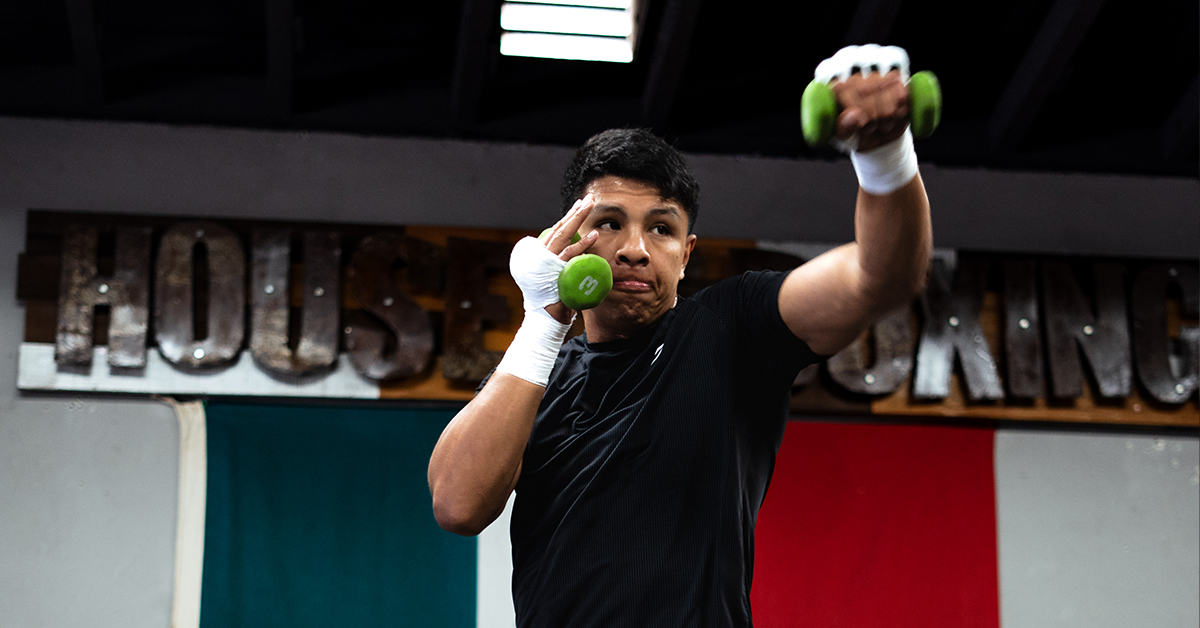
Jaime Munguía does not enter a gym loudly. He arrives the way some people arrive at a place they know by heart: with ritual, with ease, with the quiet confidence of someone who understands exactly why he is there. A smile. A coffee. At House of Boxing in San Diego, that calm is one of the first things you notice about him. So, too, is the tension beneath it. Munguía carries himself with a radiant warmth, but underneath it is something more forceful, more disciplined, more exacting. He is, in every sense, a quiet storm that has been building for quite some time.
That is what stands out most watching him ahead of his May 2 return against Reséndiz: not simply that he looks prepared, but he looks settled. There lies the difference. Boxing is full of fighters who can be made to look dangerous for a day. Far fewer look as though they have been rebuilt with intention. Munguía, now working within Eddy Reynoso’s orbit, appears to be pursuing something more exacting than readiness. He appears to be pursuing refinement.
First Section
For a fighter from Tijuana, that pursuit carries its own kind of meaning. Tijuana has long produced boxers with grit in abundance and romance in the telling: young men shaped by borderland urgency, by repeated adversity, by the understanding that fighting can be craft, escape, and duty all at once. Munguía came up in that tradition and turned professional at 16, rising quickly through the sport with the kind of pressure-heavy style that made him impossible to ignore. He became a world champion at 154 pounds, then kept climbing, not just in weight but in expectation, moving from promising contender to one of the most closely watched names in boxing.
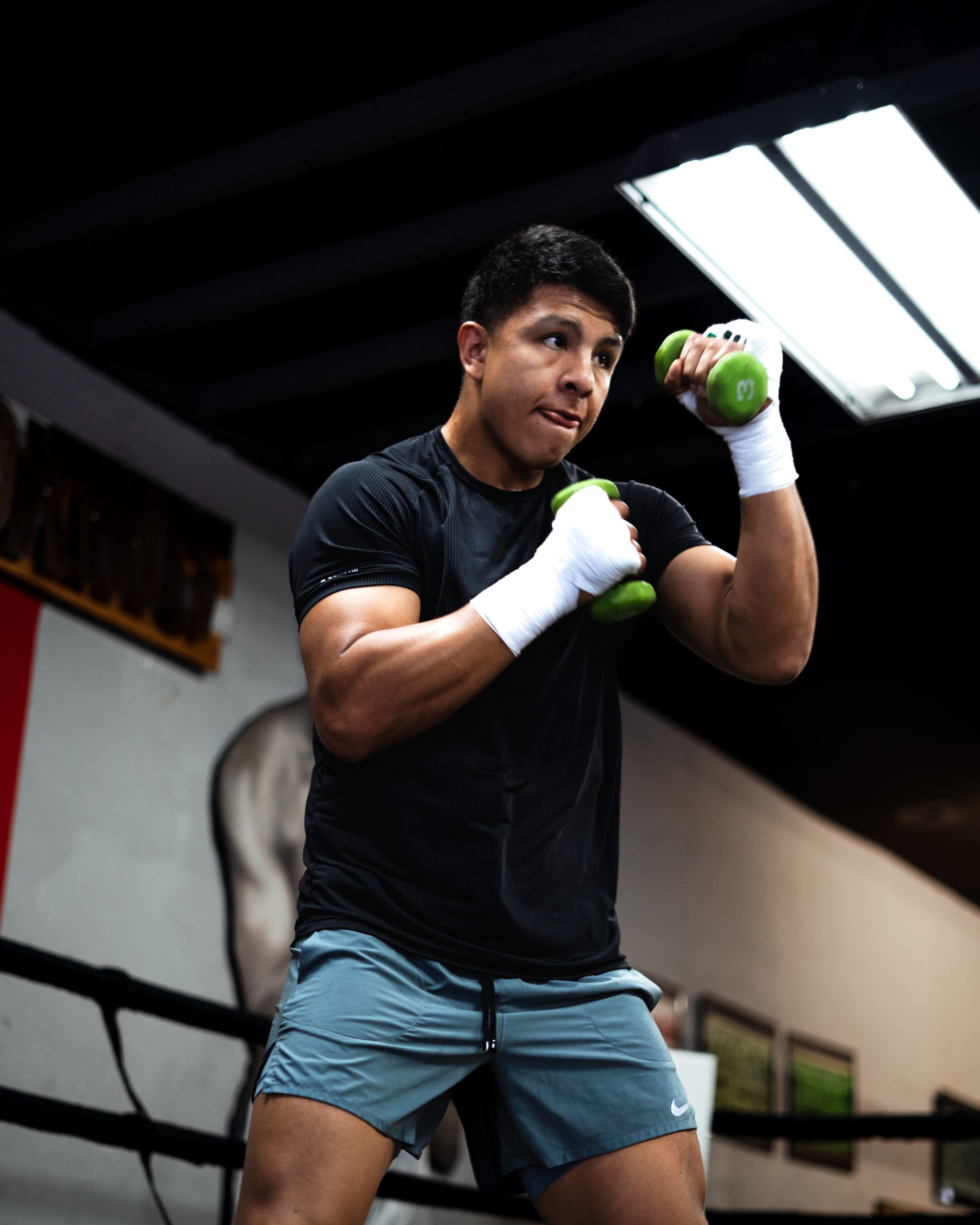
However, ambition in boxing is rarely a linear road. It demands revision. It demands new rooms, new voices, new tests of discipline. Early last year, Munguía made one of the most significant decisions of his career, joining forces with Reynoso, the renowned trainer whose name has become synonymous with one of boxing’s most elite working environments. Reynoso’s camp is not built on celebrity alone, even if celebrity inevitably surrounds it. It is built on the kind of work that speaks for itself.
Visual Storytelling
And so May 2nd arrives, not as a mere return of Munguía, but as a reintroduction. Around him is one of the sport’s most formidable ecosystems, a camp associated with names like Canelo Álvarez and other high-level fighters who sharpen the atmosphere simply by occupying it. In a room like that, greatness is sharpened in company.
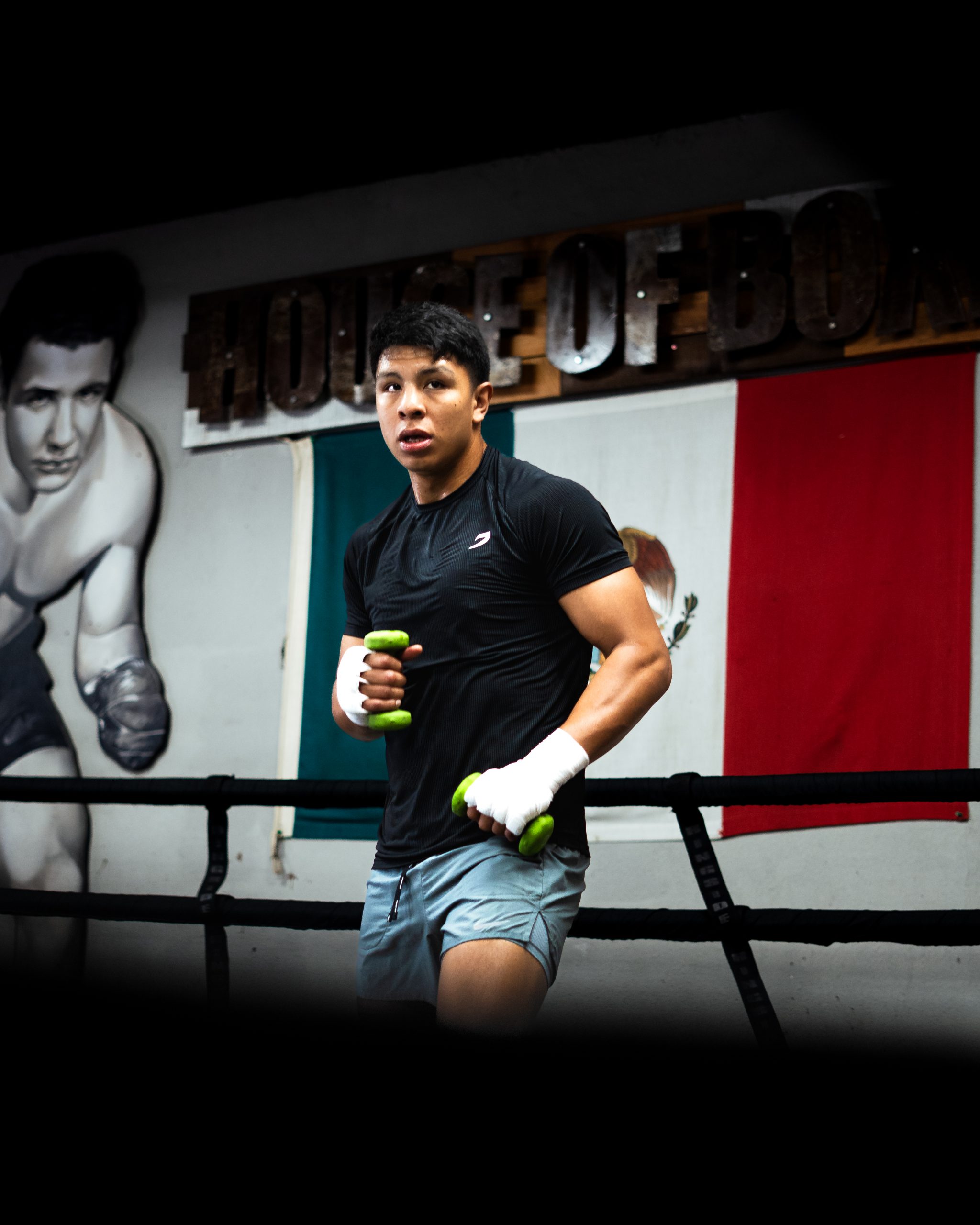
That matters, especially now, because what Munguía seems to have found is not only elite preparation, but the right setting in which to absorb it. He is training out of House of Boxing, the historic San Diego gym owned by Carlos Barragán Sr. and Carlos Barragán Jr., a place whose story begins in the Barragán family’s backyard in the early 1990s and has since grown into something larger than a gym. It is part neighborhood institution, part training ground, part living archive of the sport’s old values: humility, work, continuity, respect.
Video Section
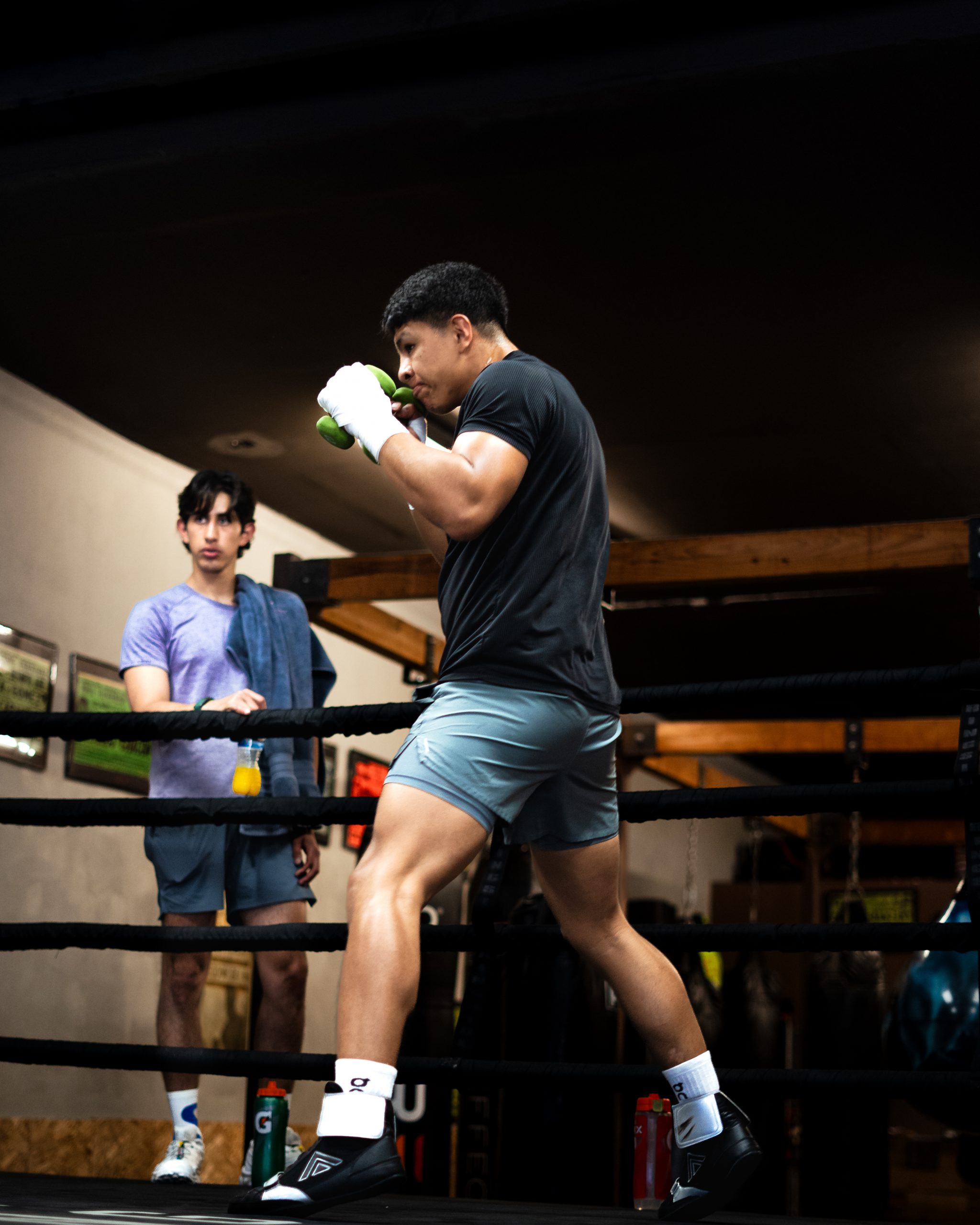
That is part of what makes this moment compelling. In an era when boxing often sells itself with noise, Munguía’s camp suggests something steadier and, in many ways, more persuasive. At House of Boxing, Team No Boxing No Life is not simply staging training camp. It is building an ecosystem, one that aims to shape the next generation of champions while grounding them in the habits of those already carrying the sport at the highest level. The younger fighters are not being asked to imagine greatness in the abstract. They are seeing it modeled in real time.
And Munguía, perhaps more than anyone in this moment, sits at the center of that example.
He is no longer just the young contender from Tijuana, no longer just the former champion with a loyal following and a fan-friendly style. He is now a fighter standing inside one of boxing’s most demanding circles, absorbing its rhythm, its discipline, its expectations. Around him are accomplished names, and above him is one of the sport’s most respected trainers. Beneath him is the daily structure of a gym with history in its walls. Blended together, it has given Munguía something every serious fighter hopes to find but few ever truly do: the right place, at the right time, with the right urgency.
So yes, he looks stronger, and yes, he looks sharper, but those words alone undersell what is happening.
The more interesting story is that Jaime Munguía does not look like a man simply preparing for a fight. He looks like a fighter being clarified by his environment.
By the time he steps into the ring on May 2 against Reséndiz, the selling point may not be that he is back. It may be that he has arrived in a new form altogether: shaped by Tijuana, sharpened in San Diego, and guided by a camp that has made excellence feel like routine. In boxing, that kind of alignment can be dangerous.
And for the man who still walks in smiling, coffee in hand, that may be the most telling sign of all. The storm is not coming. It is already here.