
Jay-Z, Dame Dash & How Roc-A-Fella Built Hip-Hop’s Empire
UND1SPTD CULTURE / MUSIC / BUSINESS
Before the Billionaire: How Jay-Z, Dame Dash and Roc-A-Fella Built Hip-Hop’s Blueprint for an Empire
As HBO’s JAŸ-Z In 8 takes Shawn Carter back through the records that shaped his life, it also creates the perfect moment to revisit the machine surrounding those records. Long before “artist-owned ecosystem” became normal business language, Jay-Z, Damon Dash and Roc-A-Fella were showing hip-hop how music could become the entrance to fashion, touring, film, nightlife, sports and something even more valuable: ownership.
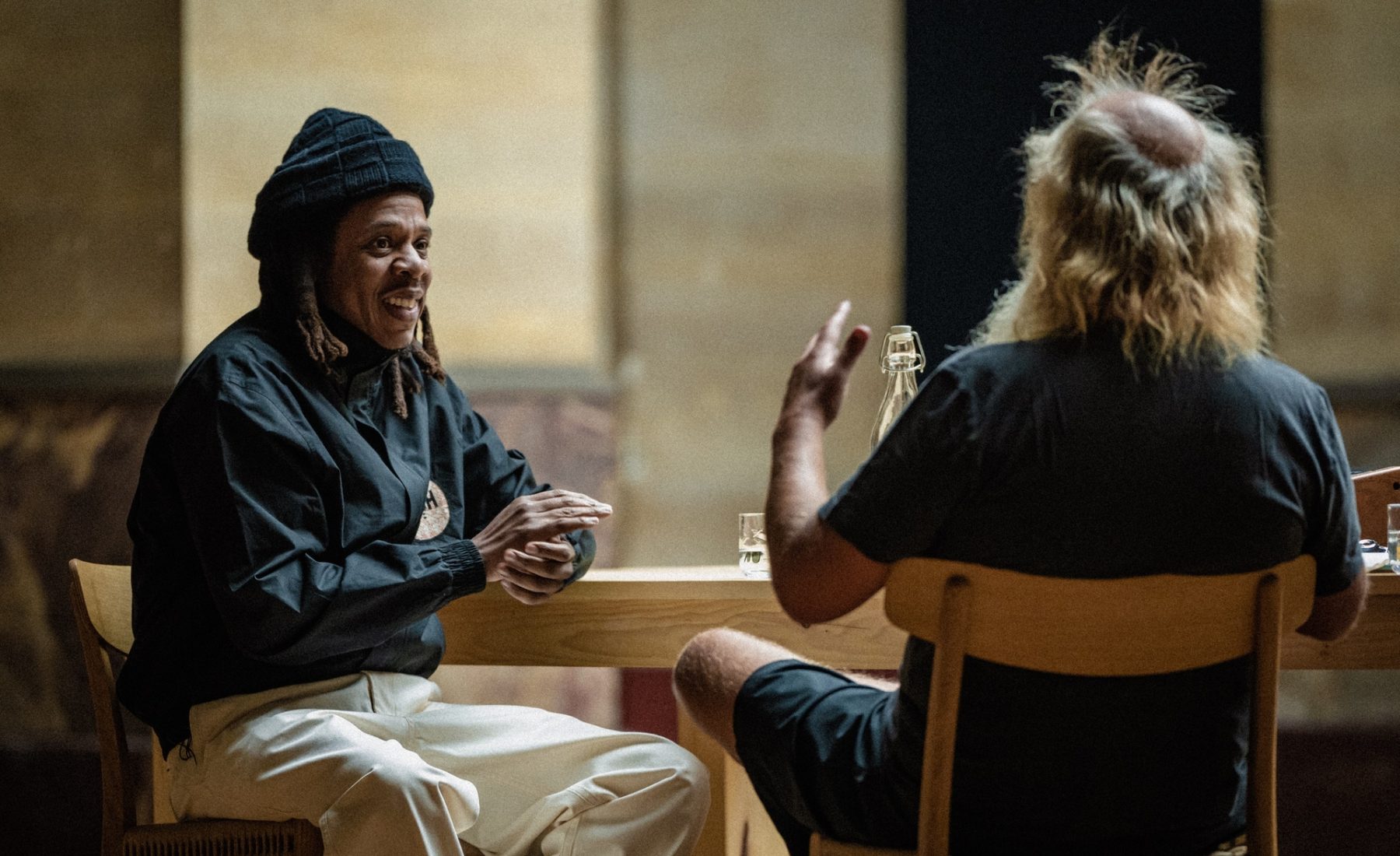
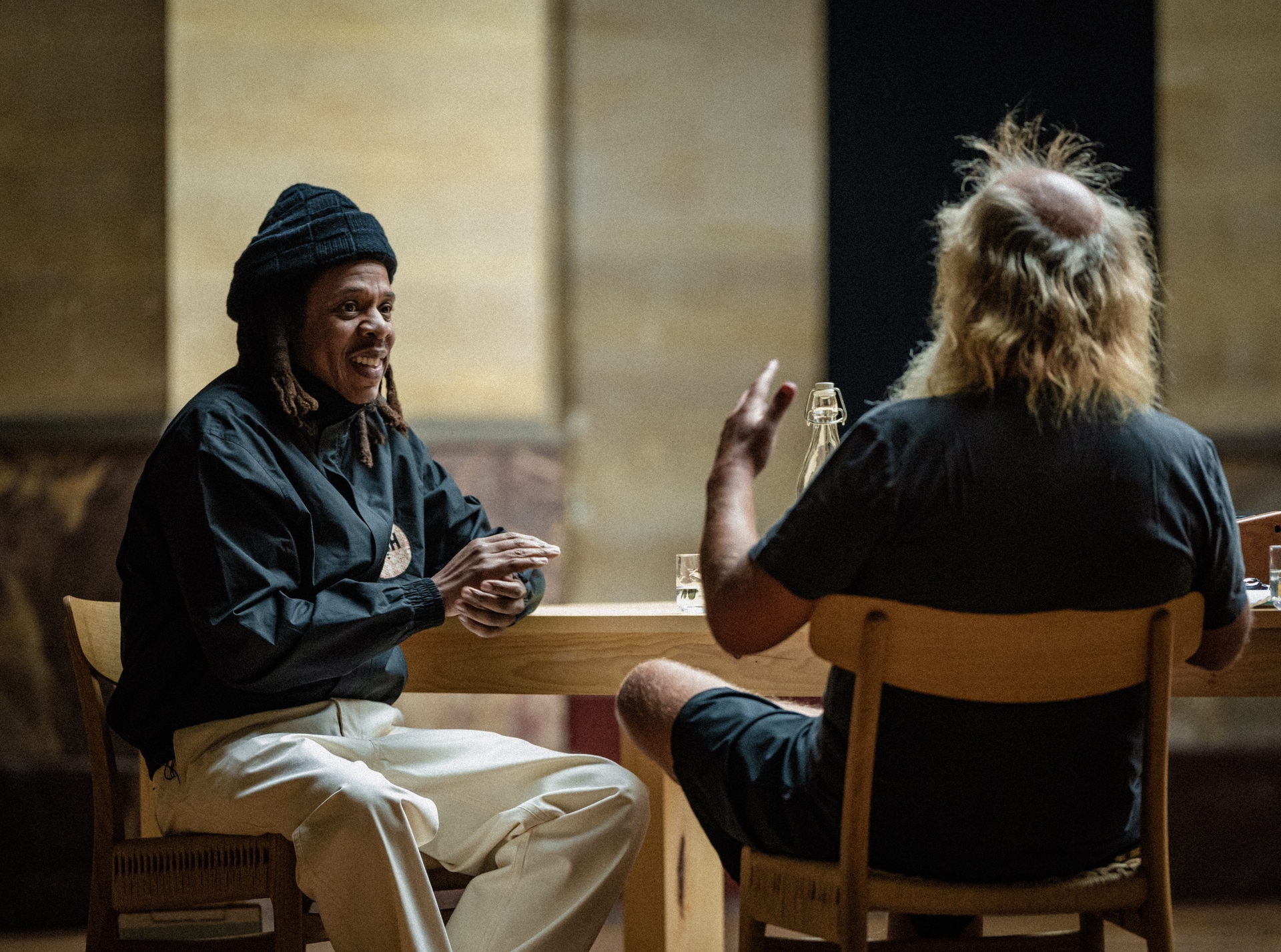
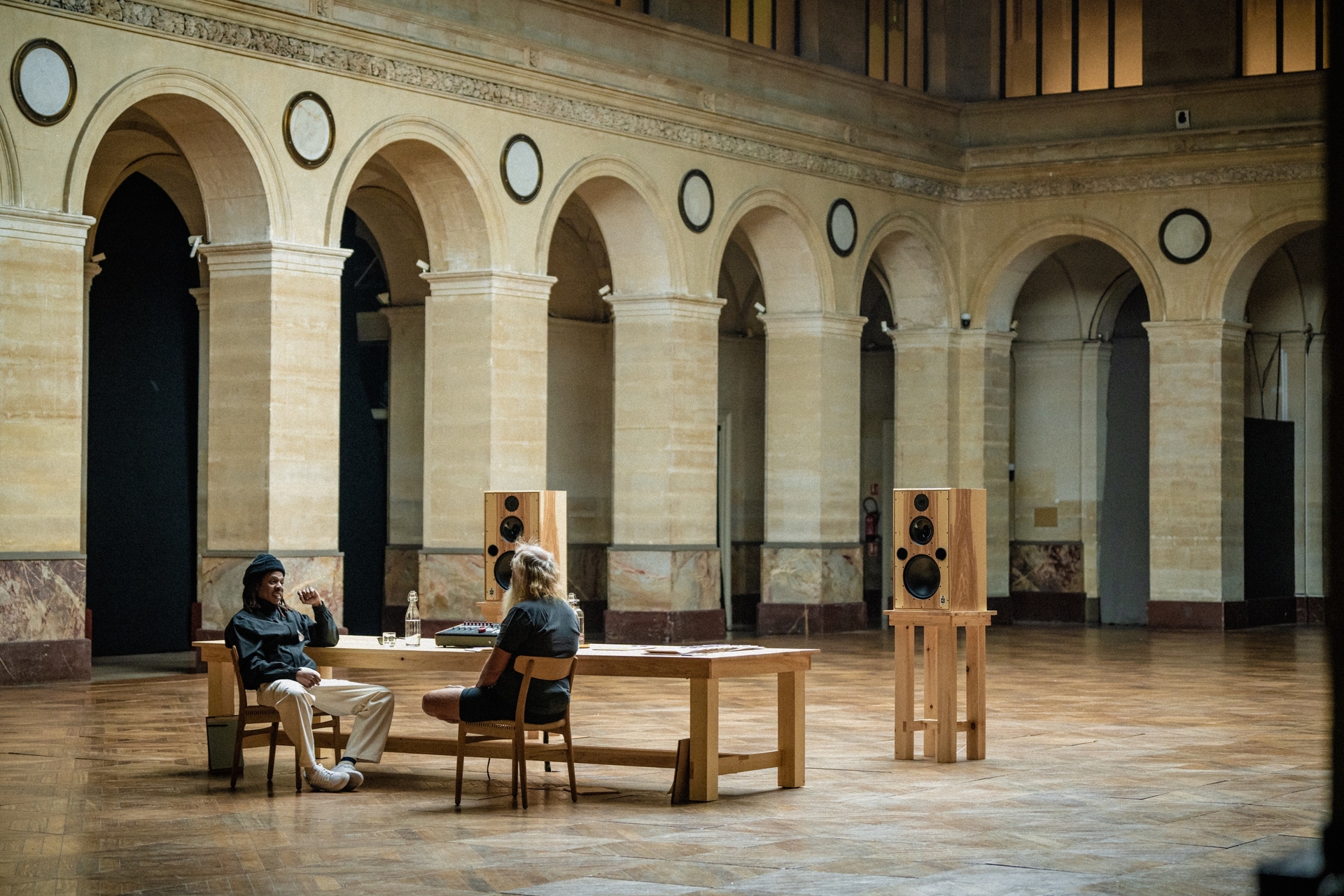
There is something almost strange about watching Jay-Z explain himself in 2026. For three decades, part of Shawn Carter’s appeal has been that he rarely seemed obligated to do it. The albums carried the biography, the business philosophy, the mistakes, the ambition and eventually the maturation, while the man behind them maintained enough distance to allow listeners to find the meaning themselves. HBO’s JAŸ-Z In 8 changes that relationship by placing Jay across from longtime friend and producer Rick Rubin for an extended conversation about the songs, memories and experiences that built one of the most consequential careers in modern music.
The format is particularly interesting because Jay’s résumé has become so enormous that the businesses can sometimes eclipse the music that gave those businesses their value. In the series, Rubin repeatedly returns the conversation to the records and the writing itself, giving Jay room to unpack everything from his childhood and early ambition to relationships, fame, regret and the way his perspective changed as his world became larger. The first four chapters have already moved through records including “Can’t Knock the Hustle,” “Brooklyn’s Finest,” “This Can’t Be Life,” “4:44,” “Where I’m From” and “Can I Live,” making the series feel less like a conventional career retrospective and more like an artist opening up his own catalog and explaining the experiences hidden inside it.
Understanding how Shawn Carter became something larger than a recording artist, however, requires looking at more than the lyrics. It requires returning to Roc-A-Fella Records and to a period when Jay-Z, Damon Dash and Kareem “Biggs” Burke were building a company around an artist the traditional music business had initially failed to recognize. Roc-A-Fella would become much more than the imprint responsible for releasing Reasonable Doubt. It became the environment where several ideas that later defined Jay-Z’s business career were being tested in real time.

Before Roc Nation, There Was Roc-A-Fella
Jay and Dame became the most visible partnership, but the story deserves more accuracy than nostalgia sometimes gives it. Roc-A-Fella had three founders, and Biggs Burke’s role should not disappear because his personality was less public. Still, there was something uniquely compelling about the dynamic between Jay and Dame. Jay increasingly projected control, calculation and an understanding that scarcity itself could create power, while Dame operated with urgency and confrontation, seemingly determined to make certain that nobody in the industry underestimated what they had built.
That contrast helped make Roc-A-Fella feel different from a traditional record label. Fans did not simply hear about the company on liner notes. They could see the company operating. They saw the Roc chains, the entourage, the clothes, the offices, the touring operation, the films and the personalities surrounding the artists. Roc-A-Fella created the feeling that buying the record meant gaining access to a larger world, and that distinction became one of the most important pieces of its cultural influence.
In modern marketing language, what they were building would probably be described as an entertainment ecosystem. The album created the audience, the audience supported the tour, the tour generated stories and content, the personalities created demand for fashion, and each new venture increased the value of everything attached to the Roc identity. Roc-A-Fella reached that conclusion before the language surrounding creator economies, vertical integration and cultural equity became commonplace.
They Didn’t Just Sell Records. They Built the World Around Them.
The Hard Knock Life Tour in 1999 demonstrated how much larger that world could become. Jay-Z and DMX headlined a bill that also included Method Man and Redman at a time when the traditional concert business still treated large-scale hip-hop touring with considerably more skepticism than rock or pop. The tour helped show that the enormous audience purchasing rap records could also become a dependable national arena audience, reinforcing that hip-hop’s commercial power did not need to end at the record store.
Roc-A-Fella then extended the touring moment through film. Backstage gave viewers access to the personalities, pressure and business surrounding the Hard Knock Life Tour rather than simply documenting performances. That choice feels especially modern in hindsight. Today, nearly every major entertainment campaign is expected to create a stream of behind-the-scenes material that deepens the audience’s relationship with the talent. Roc-A-Fella was already recognizing the value of letting people see the machine.
The company’s expansion into narrative film pushed the strategy further. Projects such as Paid in Full, produced by figures including Damon Dash and Jay-Z through the Roc-A-Fella orbit, allowed music, fashion, language and street mythology to move into another medium. The film’s cultural life would ultimately extend far beyond its original theatrical performance, becoming another example of how the Roc understood that audiences were interested in more than individual songs. They were interested in the environment that produced them.
JAŸ-Z In 8
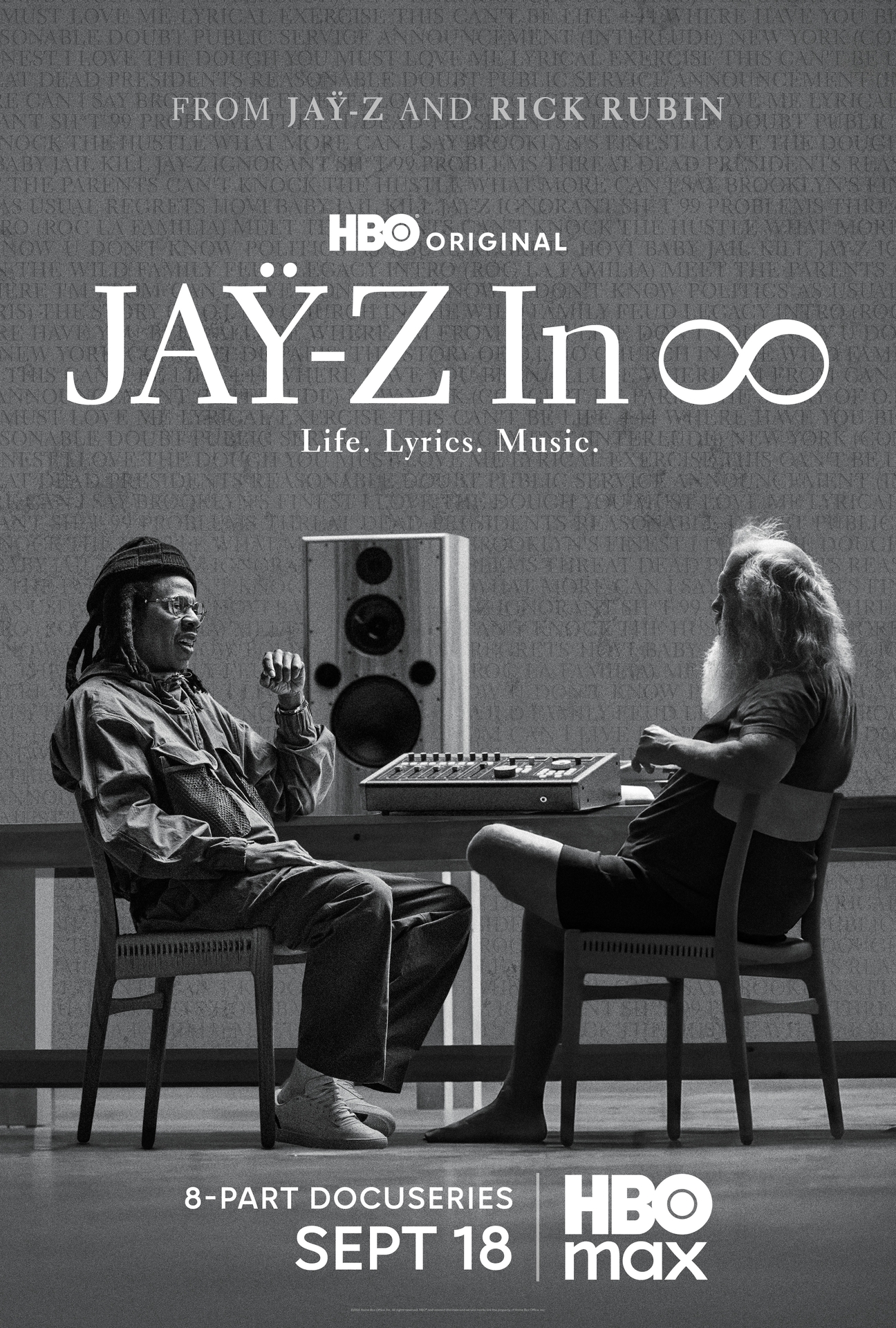
Rick Rubin’s documentary directorial debut is built around an extended conversation with Jay-Z about the writing, memories and life experiences contained inside his catalog. The eight-part series debuted September 18 and releases two chapters each Friday through October 9.
Rocawear Changed the Math
Fashion made the philosophy surrounding Roc-A-Fella even clearer. Hip-hop had already proven that artists could create enormous demand for clothing brands they did not own, frequently giving companies cultural credibility simply by wearing or mentioning their products. Rocawear represented a different proposition: if the artist and the culture could create the demand, there was no reason they could not participate directly in the economics of the product being sold.
The scale of what followed showed just how valuable that relationship between cultural influence and ownership could become. In 2007, Iconix Brand Group completed its acquisition of Rocawear’s intellectual-property assets for $204 million in cash, with the agreement providing for the possibility of additional consideration tied to performance. Jay remained involved with the brand after the transaction, giving the story a significance much larger than the headline number.
Rocawear helped establish a principle that now appears everywhere across music, sports and entertainment. Being influential enough to sell somebody else’s product is valuable, but owning part of the product or intellectual property sitting on the other side of that influence can change the economics entirely. Future generations of rappers, athletes and creators would increasingly approach partnerships through equity, ownership and participation instead of treating endorsement checks as the ceiling.
Iconix Brand Group paid $204 million in cash for Rocawear’s intellectual-property assets in 2007, with the transaction also allowing for additional performance-based consideration. The deal remains one of the clearest examples of cultural influence being converted into a valuable consumer asset.
The 40/40 Club Took the Lifestyle Offline
By the early 2000s, Jay’s business interests were beginning to move beyond ventures directly associated with Dame and the original Roc-A-Fella partnership. That distinction matters. The 40/40 Club was not a Roc-A-Fella company operated by Jay and Dame together, but philosophically it made sense as an extension of the same thinking. Instead of merely being invited into nightlife as the celebrity whose presence created attention, Jay could participate in ownership of the environment where music, sports, business and celebrity were converging.
The club demonstrated how naturally the different audiences surrounding Jay could overlap. Sports fans interacted with music fans, athletes interacted with entertainers, executives mixed with celebrities, and the environment itself reinforced the perception of the Jay-Z lifestyle beyond anything a traditional endorsement campaign could have accomplished. The businesses were different, but culturally they continued feeding the same identity.
That progression is what makes the original Roc-A-Fella philosophy so important. Roc-A-Fella did not need to own every future Jay-Z venture for the lessons of the partnership to remain visible. What began as a fight for control over the music increasingly became a broader understanding that the person creating the cultural value did not have to remain at the end of somebody else’s supply chain.
Then Jay Became More Valuable Than His Percentage
Jay’s relationship with the Nets became one of the most interesting examples because his actual ownership percentage was extremely small while his cultural importance to the Brooklyn transition was much larger. Contemporary reporting described his influence as dramatically disproportionate to his financial stake, noting his involvement with the franchise’s visual identity, including the black-and-white color scheme, as well as the broader atmosphere surrounding the team and Barclays Center.
This was not simply celebrity ownership. Jay brought something that did not appear neatly on a capitalization table: cultural equity. He represented Brooklyn to an audience that extended far beyond basketball, and his association helped give a relocating franchise an immediate relationship with the identity of the borough it was entering. When Barclays Center opened in 2012, Jay performed the first of eight sold-out concerts at the arena, connecting the building, the basketball organization and his own hometown story in a way a conventional advertising campaign could not reproduce.
That model now feels familiar because sports organizations, fashion houses and consumer brands regularly pursue entertainers and athletes as investors, creative partners and cultural ambassadors. Jay’s Nets involvement became an especially visible demonstration that an investor’s strategic value could extend far beyond the size of the check. Influence, taste, audience and credibility could themselves function like assets.
What Jay and Dame Really Changed
The breakup of Jay-Z and Damon Dash has become such a famous part of Roc-A-Fella history that it can overshadow what made their partnership significant in the first place. Their relationship fractured, their careers moved in dramatically different directions and the ownership structure surrounding the Roc changed, but a partnership does not have to survive forever for the ideas developed inside it to permanently influence an industry.
What the Roc-A-Fella era helped normalize was the idea that the artist could become part of the infrastructure surrounding his own success. The music could build an audience, the audience could support a touring business, the tour could become content, the content could strengthen the mythology, the mythology could sell clothing, and the credibility accumulated through all of those ventures could create leverage in industries far beyond recording.
Dame’s public philosophy around independence and ownership was often delivered with confrontation and sometimes controversy, while Jay’s approach increasingly became quieter and more institutional. Their methods diverged, but the larger idea proved durable. Cultural influence becomes considerably more valuable when the person generating it owns something on the other side of the transaction.
That Is What Makes JAŸ-Z In 8 More Interesting
This is why HBO’s series works so well as an entry point into the larger conversation. JAŸ-Z In 8 is primarily about the music, the writing and the experiences contained inside the catalog rather than an exhaustive examination of Jay’s corporate history. That focus actually makes the business story easier to understand because it restores the proper order of events. The influence came before the empire.
There is no Rocawear without millions of people first caring about how Jay-Z presented himself. There is no strategic value in attaching Jay to the Brooklyn Nets without Brooklyn already associating him with the borough. There is no nightlife brand built around his presence unless the public has first assigned value to being near that presence. Roc Nation, sports representation and the later investments all become easier to understand when viewed as extensions of cultural capital accumulated through the records.
Thirty years after Reasonable Doubt, that progression may be the most important reason to revisit Roc-A-Fella while JAŸ-Z In 8 is airing. Jay-Z, Damon Dash and Kareem Burke did not invent every idea that now defines the creator economy, nor should every business Jay later built be retroactively credited to the original partnership. The history is more interesting when those distinctions remain intact. What the Roc demonstrated was how music could function as the center of a much larger economic universe without losing the culture that made the music powerful.
That lesson has now become standard operating procedure across entertainment. Artists launch companies before their debut albums have finished cycling. Athletes negotiate equity alongside endorsement fees. Creators build communities they can monetize without relying entirely on traditional gatekeepers, while entertainment companies increasingly recognize that culture itself can be an asset worth owning. Roc-A-Fella was exploring many of those relationships before the vocabulary surrounding them had fully developed.
HBO is using eight chapters to take Shawn Carter back through the songs that made Jay-Z possible. Watching those conversations with the history of Roc-A-Fella in mind reveals an equally important story happening outside the recording booth. The catalog created the culture, the culture created leverage, and over time that leverage became the foundation of an empire.
The billionaire story is impressive, but the blueprint that came before it may ultimately be more useful. It shows what can happen when an artist stops treating influence as the final product and begins treating it as the beginning of ownership.
Watch the Story Behind the Records
JAŸ-Z In 8 is now airing on HBO and streaming on HBO Max, with two new chapters arriving each Friday through October 9. The series places Jay-Z and Rick Rubin inside a stripped-back conversation about the writing, memories and experiences that shaped a catalog now entering its fourth decade of influence.
Reporting references HBO / Warner Bros. Discovery series materials, U.S. Securities and Exchange Commission filings concerning the 2007 Rocawear transaction, and contemporaneous sports-business reporting on Jay-Z’s involvement with the Brooklyn Nets and Barclays Center.