
JAŸ-Z30: TWO NIGHTS AT SOFI. THIRTY YEARS OF STREET SOPHISTICATION
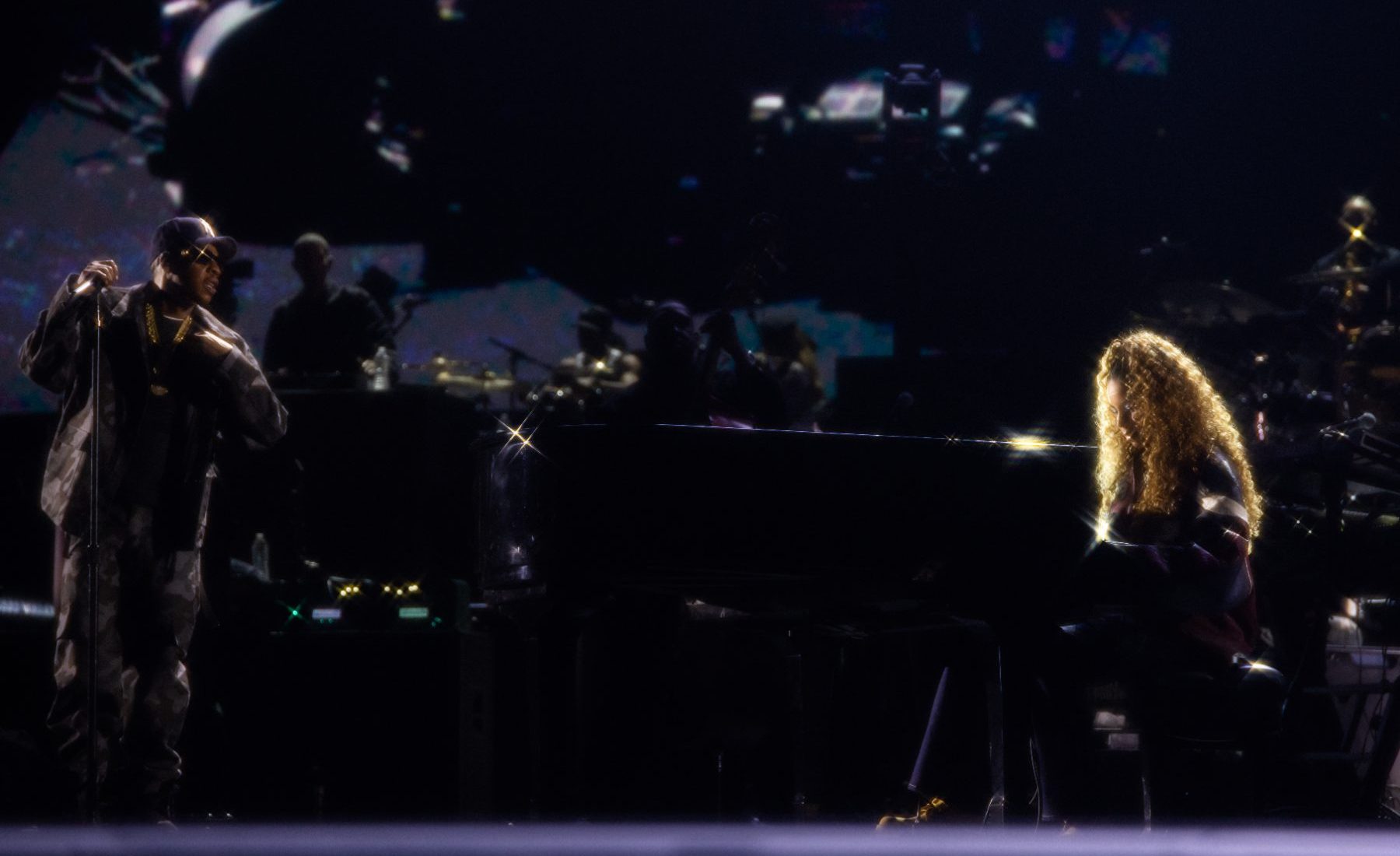
JAŸ-Z30: TWO NIGHTS AT SOFI. THIRTY YEARS OF STREET SOPHISTICATION.
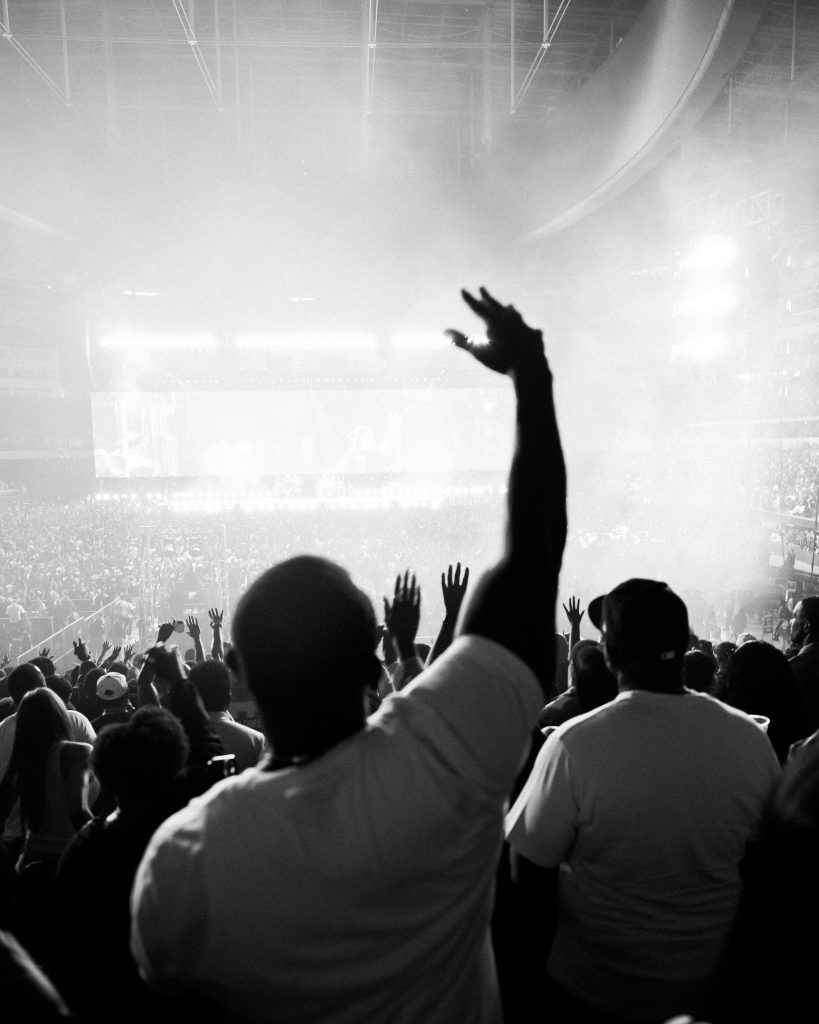
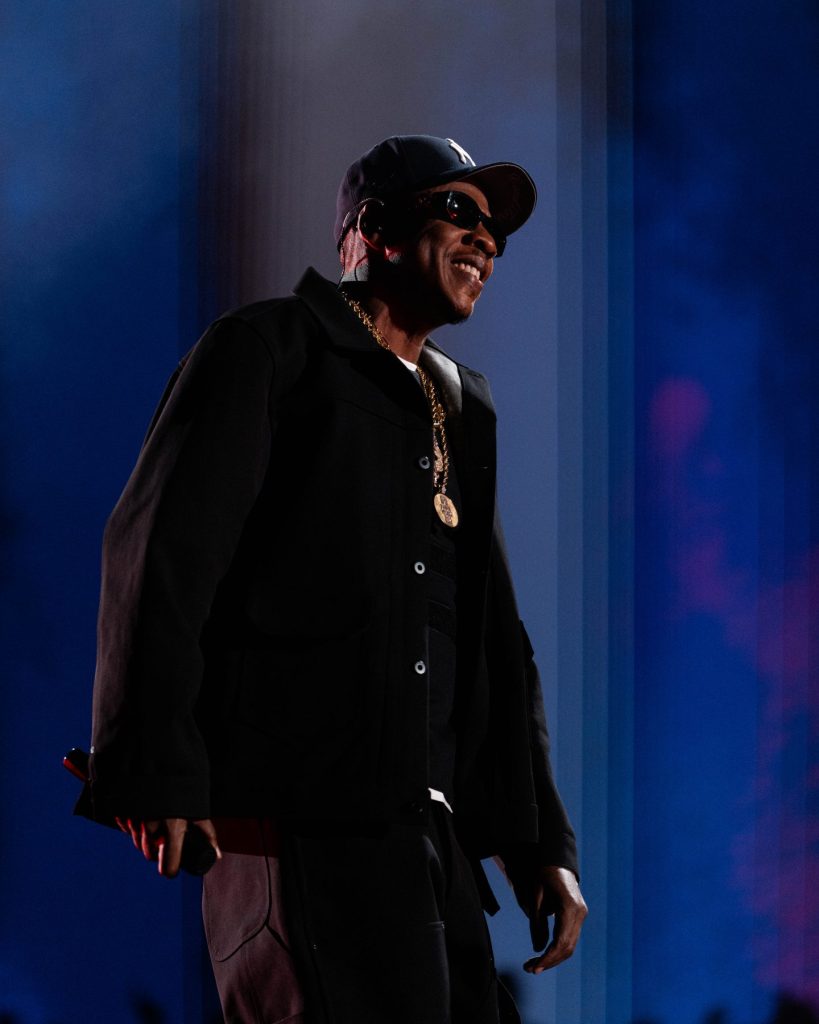
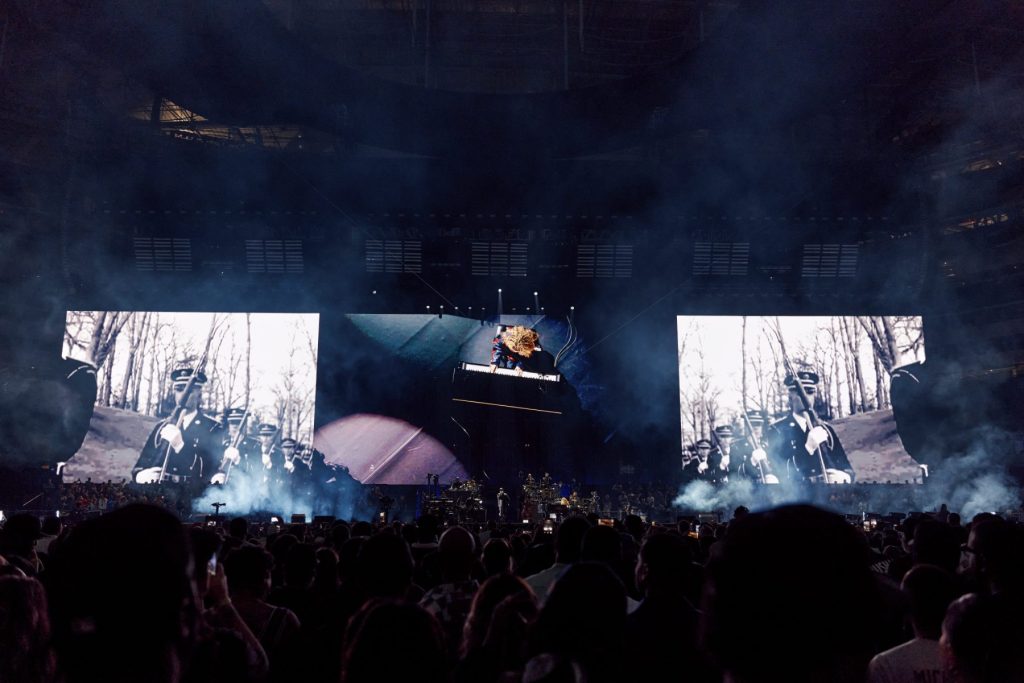
For two sold-out nights at SoFi Stadium, the story of Jay-Z was told not by a documentary narrator, but by the records themselves. On October 23 and 24, 2026, the Brooklyn artist closed his JAŸ-Z30 anniversary concert run in Los Angeles, tracing a career that began with Reasonable Doubt in 1996 and grew into one of the most influential bodies of work in hip-hop.
The performances followed anniversary celebrations in New York, London and Paris, but Los Angeles provided a uniquely revealing ending. Across two nights, Jay-Z moved between the precision of his early street narratives, the stadium-sized records that made him a crossover star and the collaborators who helped connect hip-hop’s many regions. One night brought family, Houston and an emotional catalog review. The next welcomed the Bay Area and Southern California into the spotlight. In a city once positioned as the opposing side of rap’s coastal rivalry, the final weekend felt less like a victory lap and more like a reminder of what hip-hop looks like when its history can share a stage.
He never had to choose between the streets and the mainstream.
When Reasonable Doubt arrived on June 25, 1996, it introduced a narrator with an unusually precise sense of atmosphere. Jay-Z could make a hustler’s ambition sound luxurious and its consequences sound painfully human, often on the same record. The jazz-tinted ease of “Feelin’ It,” the tension of “D’Evils” and the self-assurance of “Can I Live” established a voice that understood aspiration without romanticizing every cost of the journey.
What followed was not an abandonment of that voice, but a remarkable expansion of its reach. The Annie sample in “Hard Knock Life” helped transform a Broadway melody into a worldwide rap hook. “Girls, Girls, Girls” paired soul-soaked familiarity with Jay’s conversational wit, while “Izzo (H.O.V.A.),” “Dirt Off Your Shoulder” and “Empire State of Mind” proved he could create songs recognizable far beyond hip-hop’s traditional audience. On less commercial tracks, he continued to reward listeners who came for the dense wordplay, neighborhood details and the particular rhythm of a Brooklyn storyteller.
Jay-Z has addressed the calculation behind that accessibility in his own music. The significance was never that he lacked lyrical complexity. It was that he understood how to translate it, how to move from an intimate account of street life to a chorus heard across a stadium without making those two audiences feel mutually exclusive. His brand of sophistication was never cleanly separated from the grime that produced it. That tension became the identity.
Night One: The catalog, the family and the people who shaped it.
The opening Los Angeles show began with “Hovi Baby,” an appropriately confident entry into a set that revisited the many versions of Shawn Carter. “Izzo,” “Run This Town,” “Hard Knock Life,” “Dirt Off Your Shoulder,” “Song Cry” and “99 Problems” illustrated the breadth of a catalog able to move from celebration to confrontation to reflection, often without losing the audience for a moment.
One of the night’s most affecting images came when his daughter Blue Ivy Carter sat at the piano for “The Story of O.J.” and “Dead Presidents.” The performances connected an early cornerstone of Jay-Z’s recording history with a later meditation on race and wealth, while making the idea of legacy tangible: music created decades earlier was now being played beside the next generation of his own family.
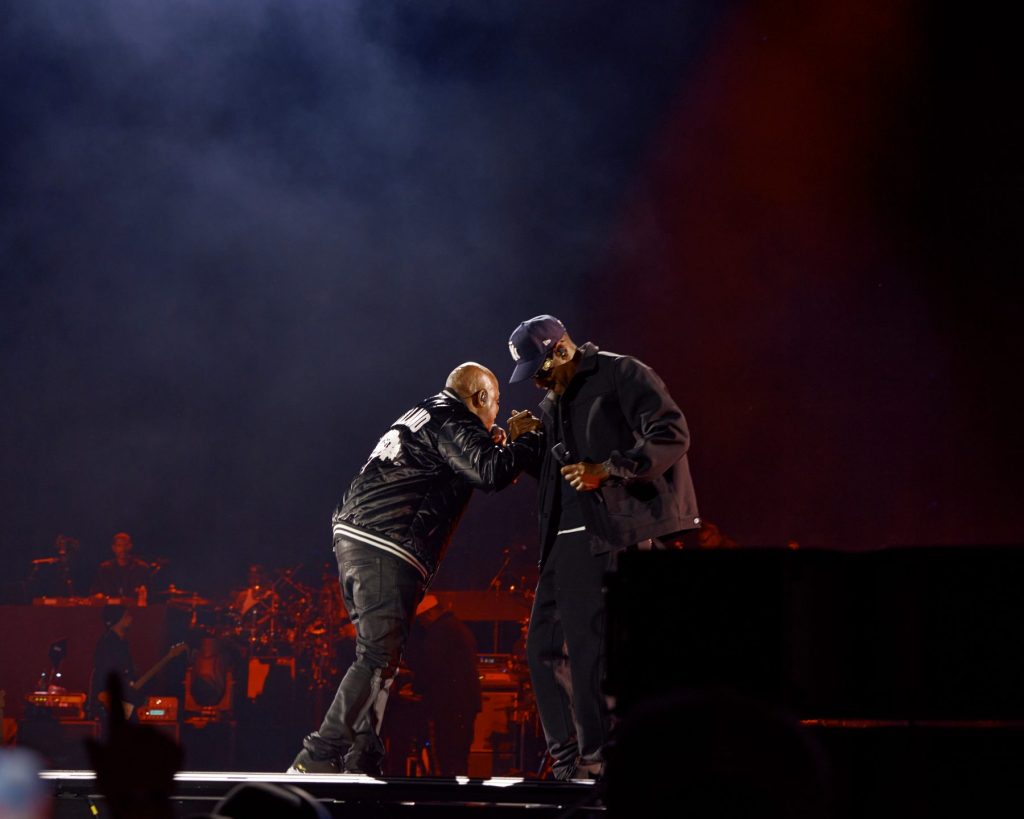
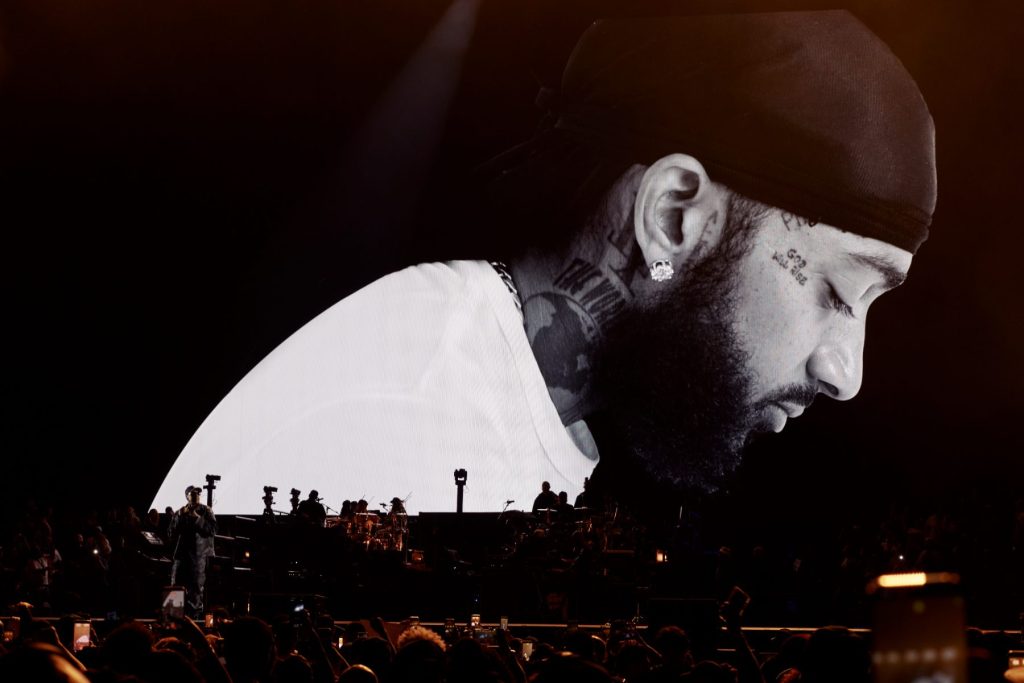
Scarface’s appearance carried a different kind of history. The Houston great joined Jay-Z for “This Can’t Be Life” and “Mind Playing Tricks on Me,” a reminder that rap’s most enduring storytelling traditions have always extended beyond a single coast. The set also paid tribute to the late Nipsey Hussle, folding references to “Hussle & Motivate” and “Last Time I Checc’d” into Jay-Z’s own material. John Legend and DJ Khaled helped bring the night to a close with “God Did.”
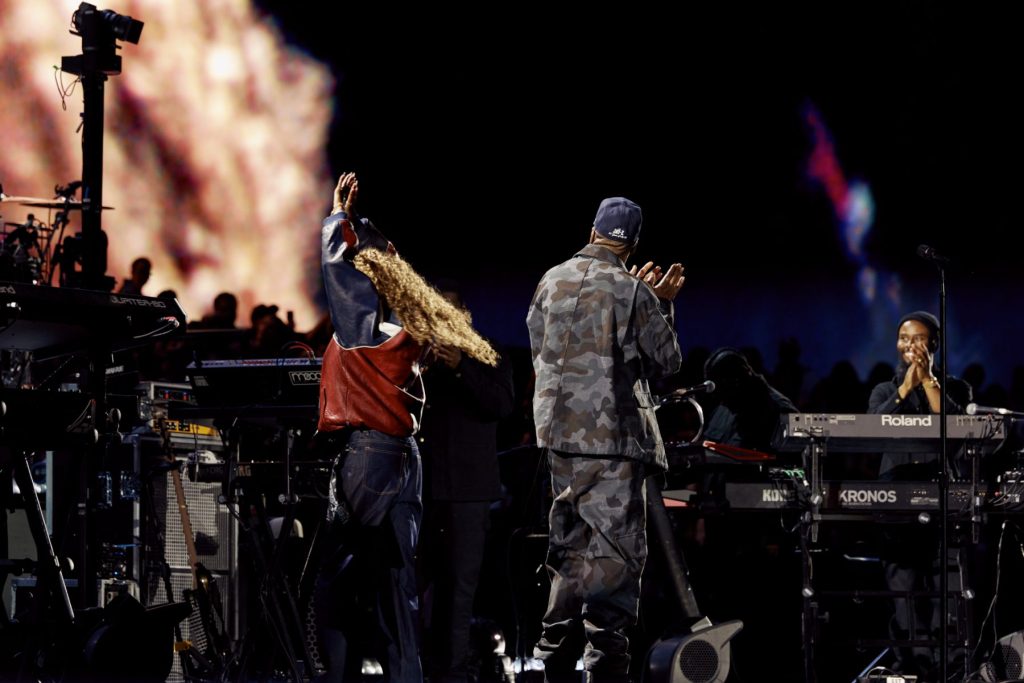
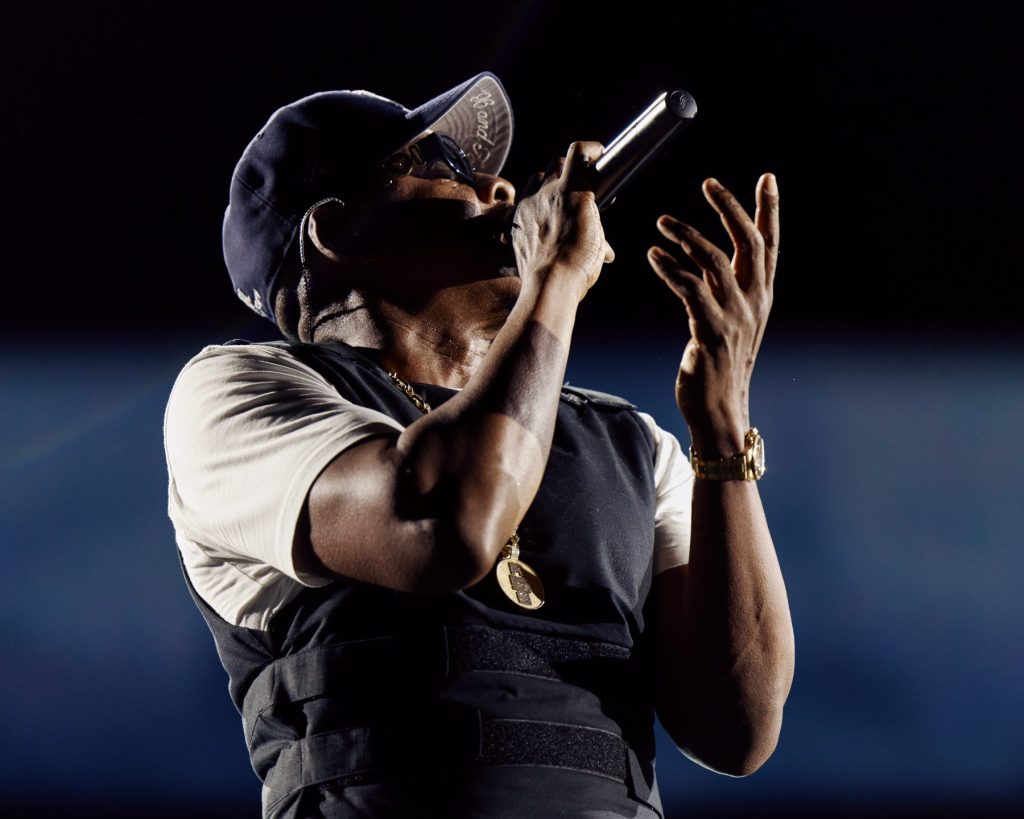
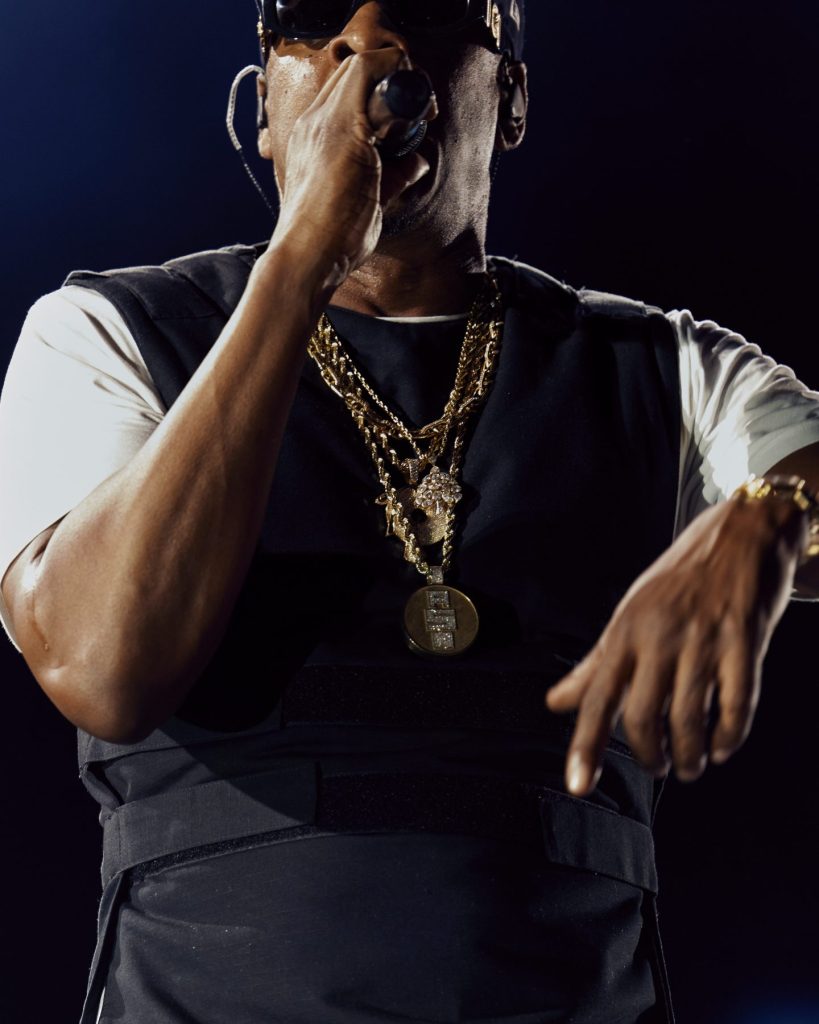
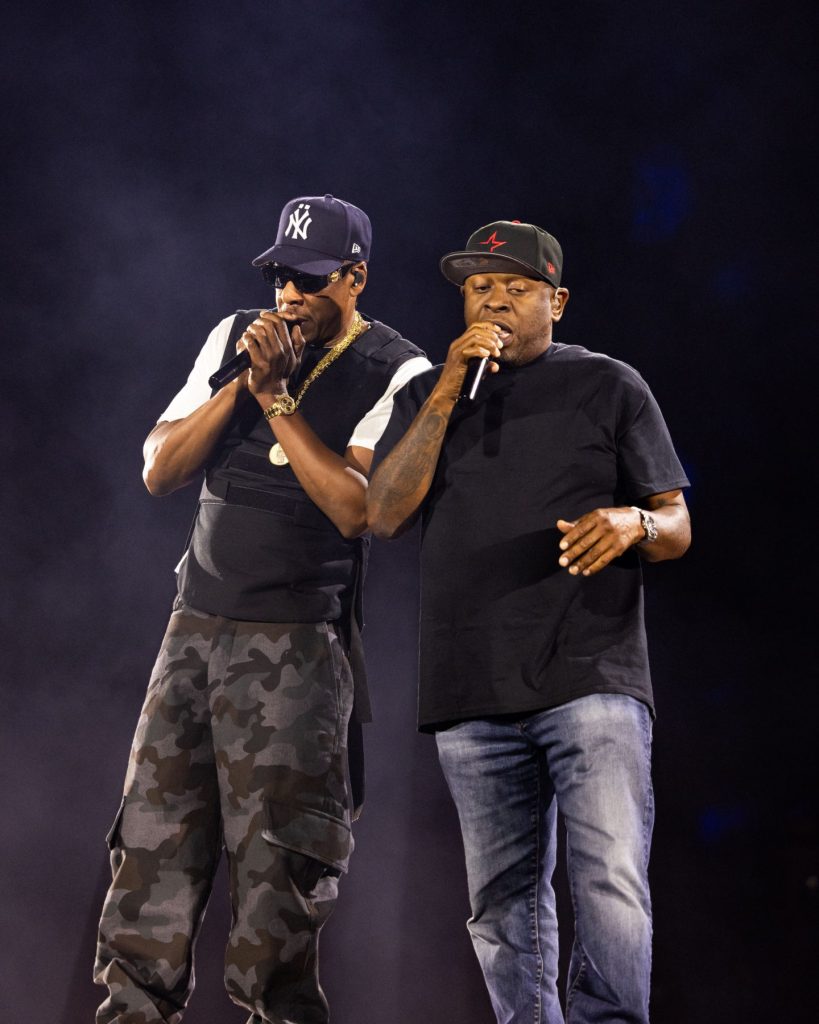
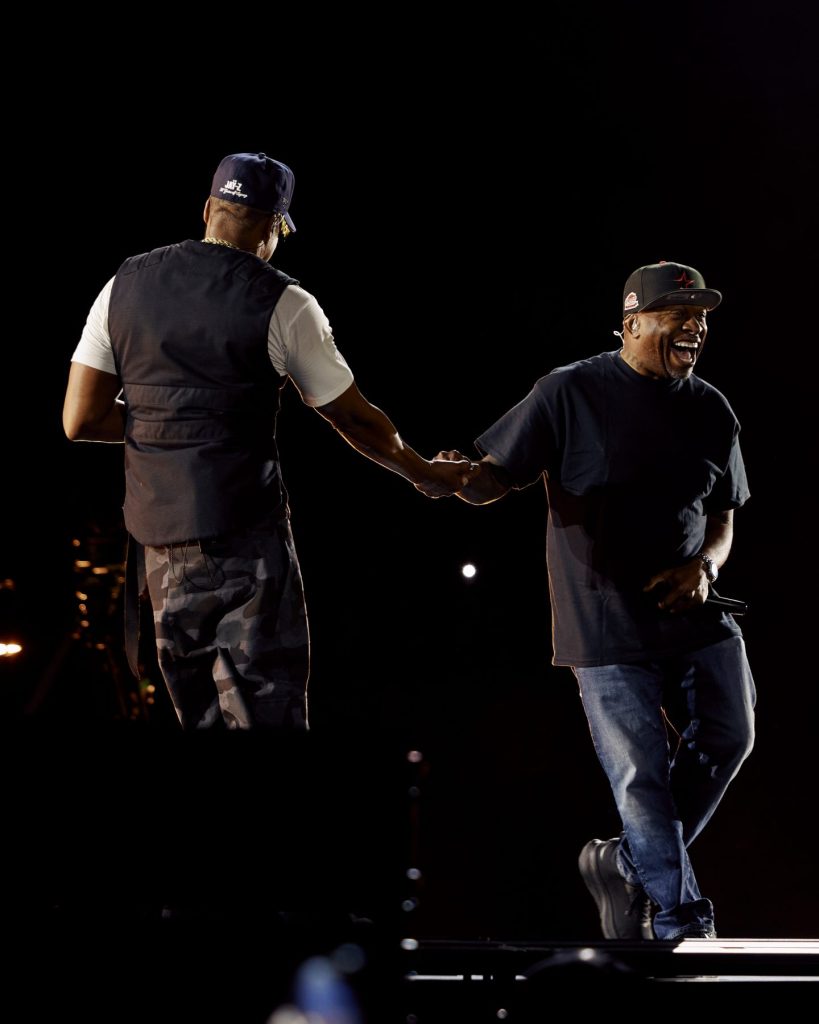
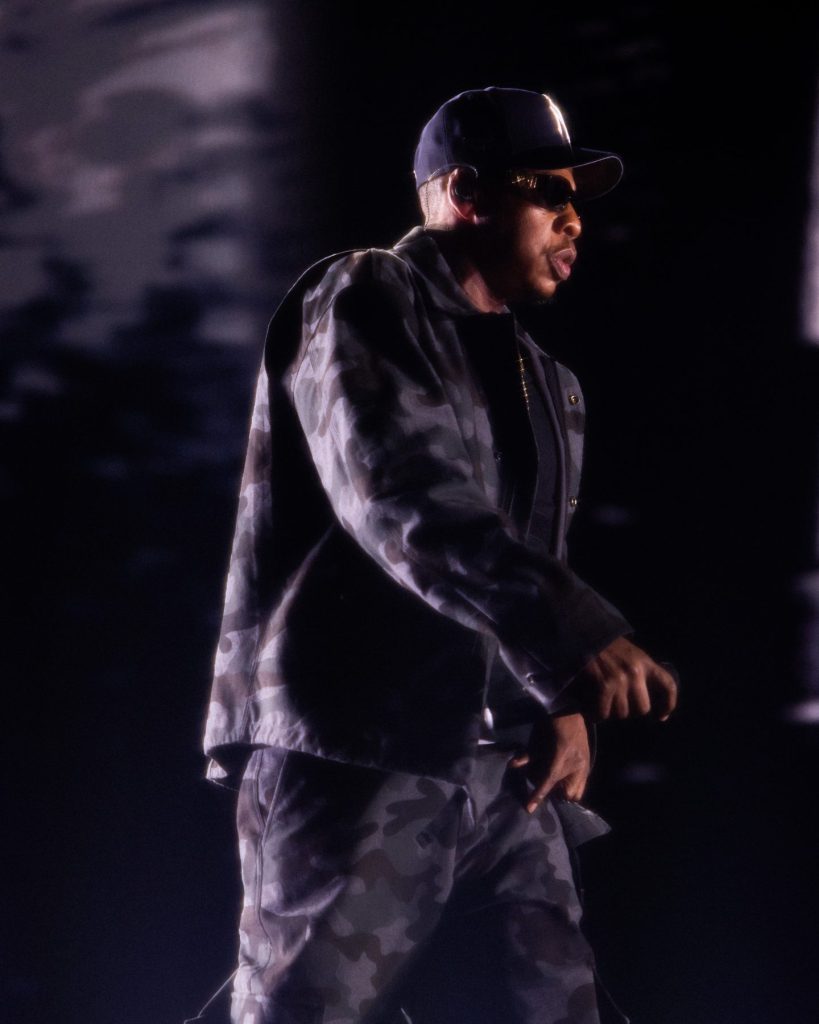
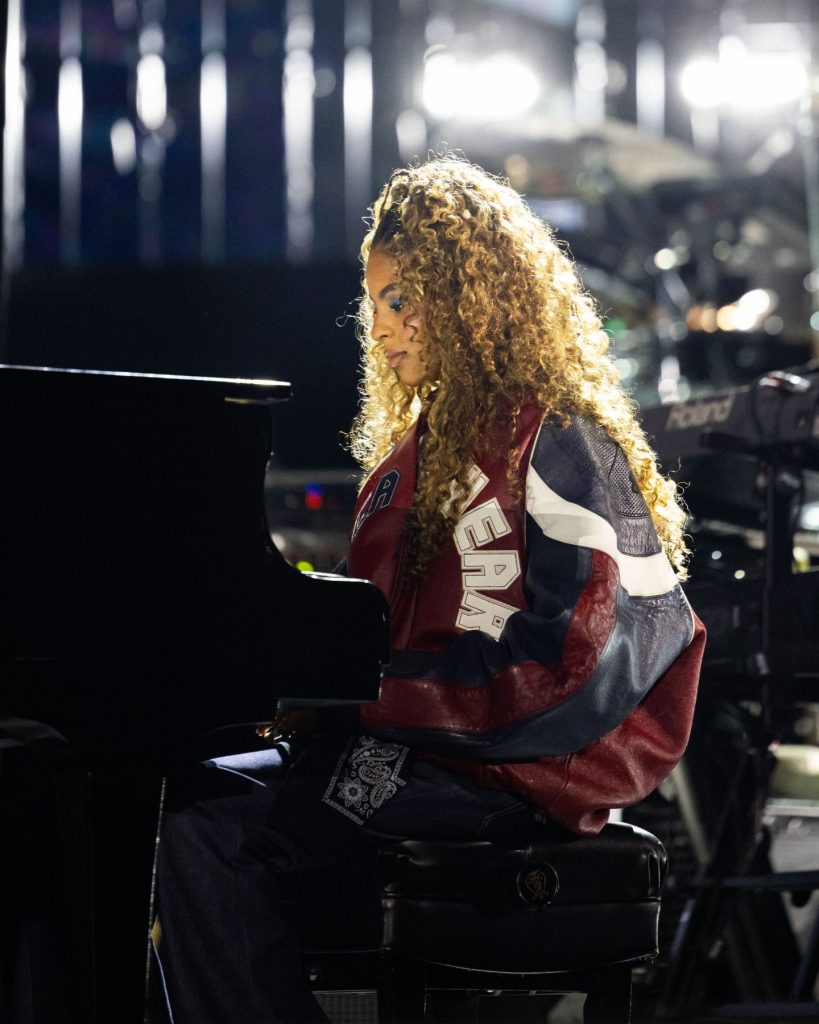
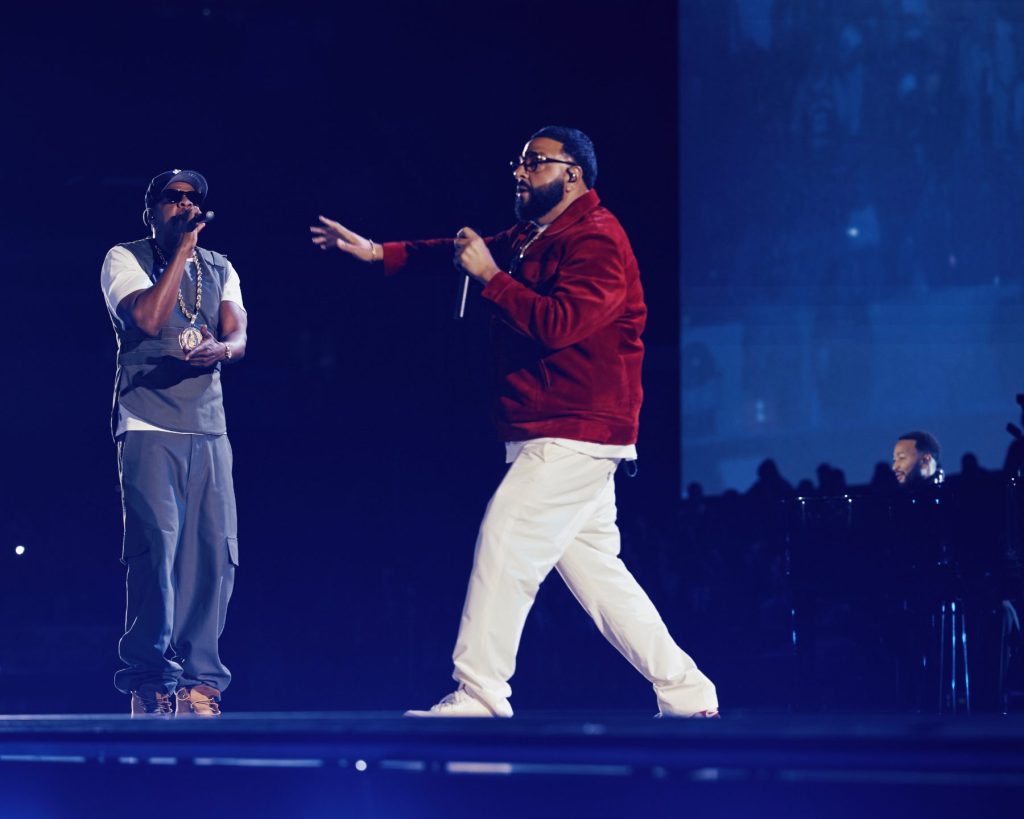
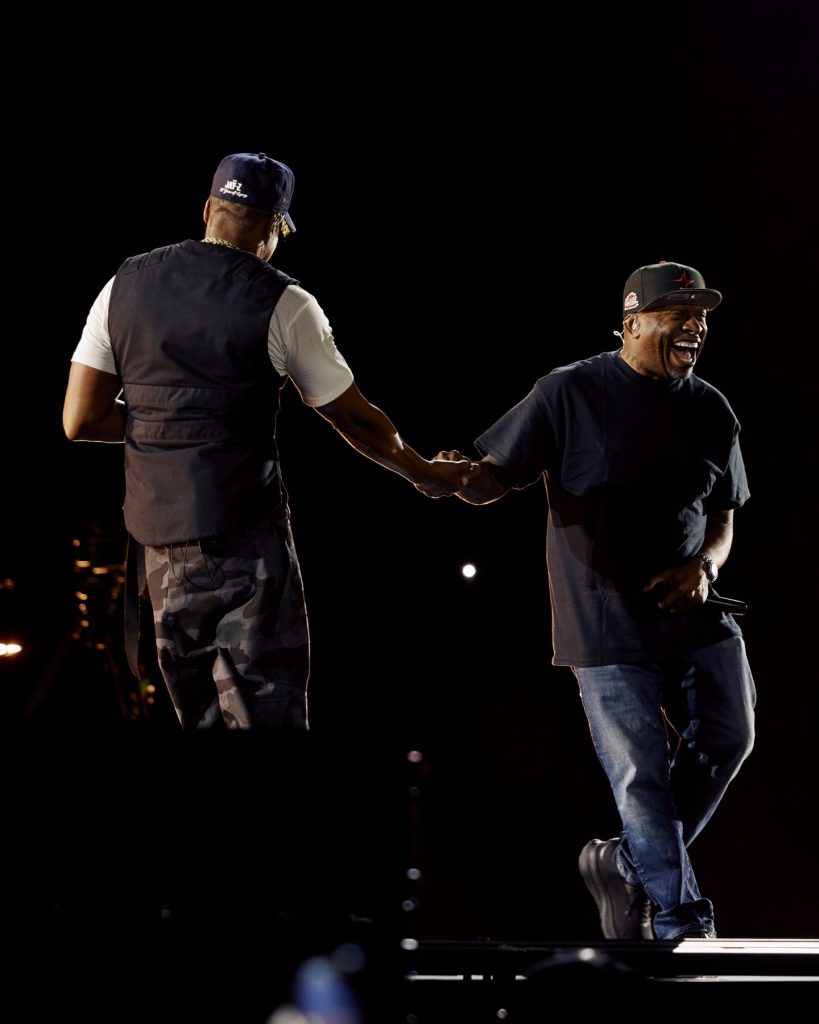
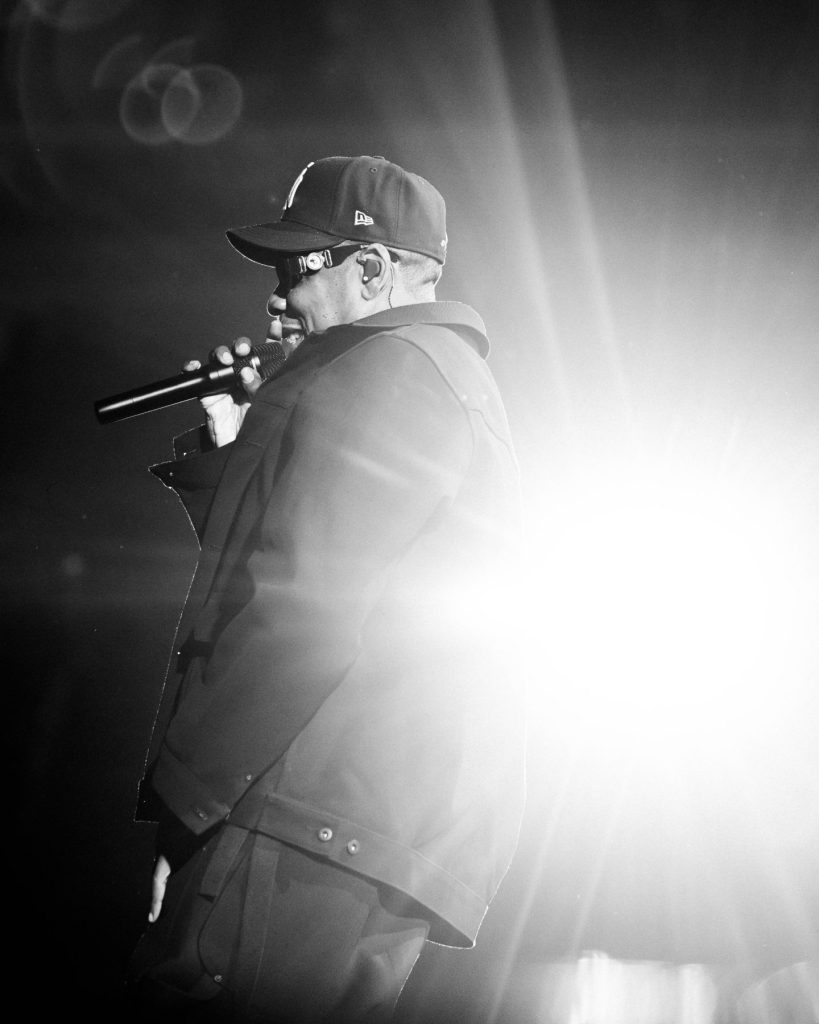
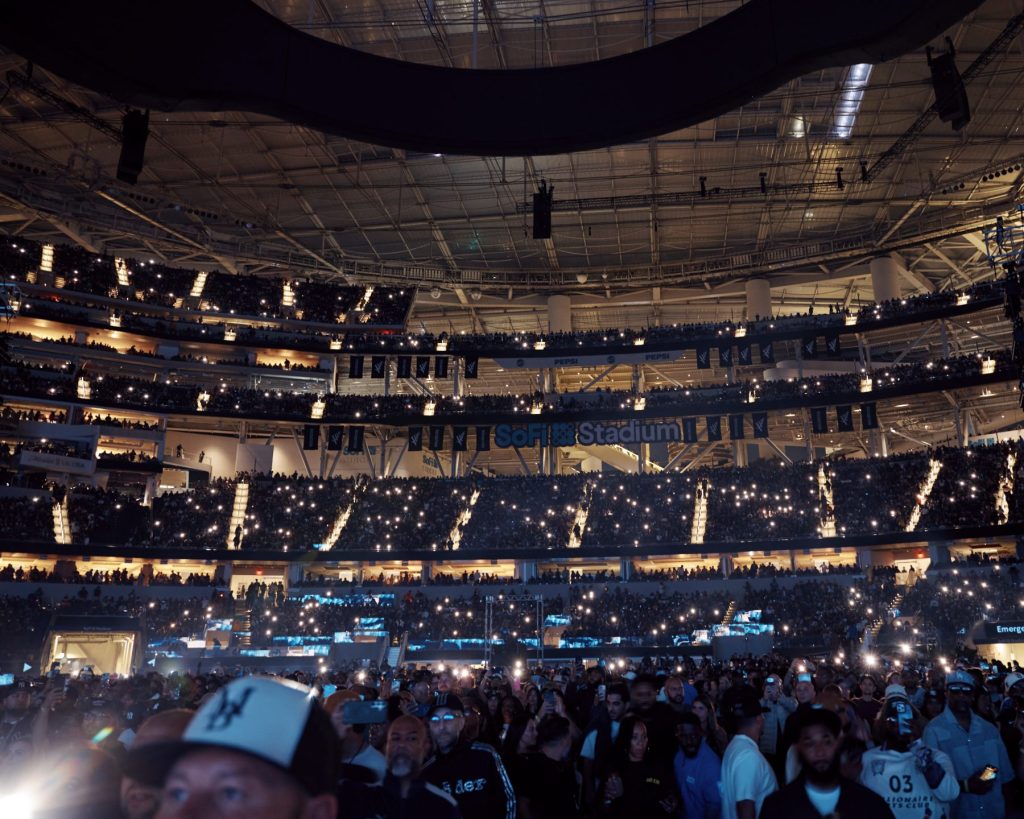
Night Two: Brooklyn hands Los Angeles the microphone.
On Saturday, Jay-Z opened with “The Watcher 2,” then turned the celebration westward almost immediately. Oakland’s Too $hort arrived for “Blow the Whistle,” giving the crowd a distinctly Bay Area moment before Jay continued into “Izzo” and “Beach Is Better.” The night built toward a reunion of West Coast voices whose influence reaches into nearly every corner of modern rap.
Snoop Dogg appeared for “Murder Was the Case,” followed by Dr. Dre, who joined Snoop for “The Next Episode,” “California Love,” “Nothin’ but a ‘G’ Thang” and “Still D.R.E.” Those songs represented more than a surprise-guest medley. Hearing them inside a Jay-Z anniversary show, in Los Angeles, made the historical irony impossible to miss: a Brooklyn legend had made room in the closing chapter of his three-decade celebration for some of the West Coast’s defining voices.
The Nipsey Hussle tribute returned on the second night as Jay-Z incorporated “Hussle & Motivate” and the instrumental of “Last Time I Checc’d” into his performance. Later, “Empire State of Mind” brought the energy back to New York, while “Big Pimpin’,” “Public Service Announcement” and “Encore” carried the concert toward its final moments. The set was its own argument for the range of the music: Southern swagger, East Coast lyricism, Bay Area attitude and Los Angeles history could all fit under one roof.
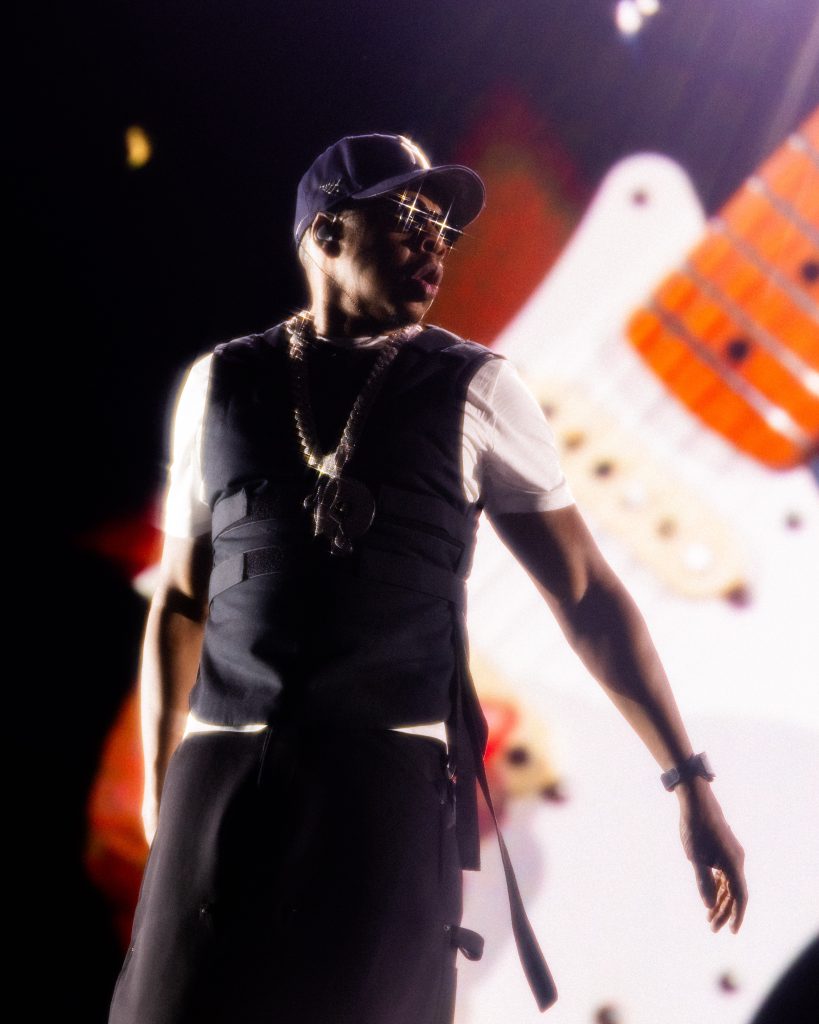
Both evenings were also an exercise in presentation. June Ambrose’s bespoke styling underscored how closely fashion has followed Jay-Z’s reinventions, from the streetwear vocabulary of the Roc-A-Fella years to the elevated tailoring and luxury references associated with his later career. At SoFi, the clothing, stagecraft and guest appearances all served the same purpose as the set lists: they showed how far this culture has traveled.
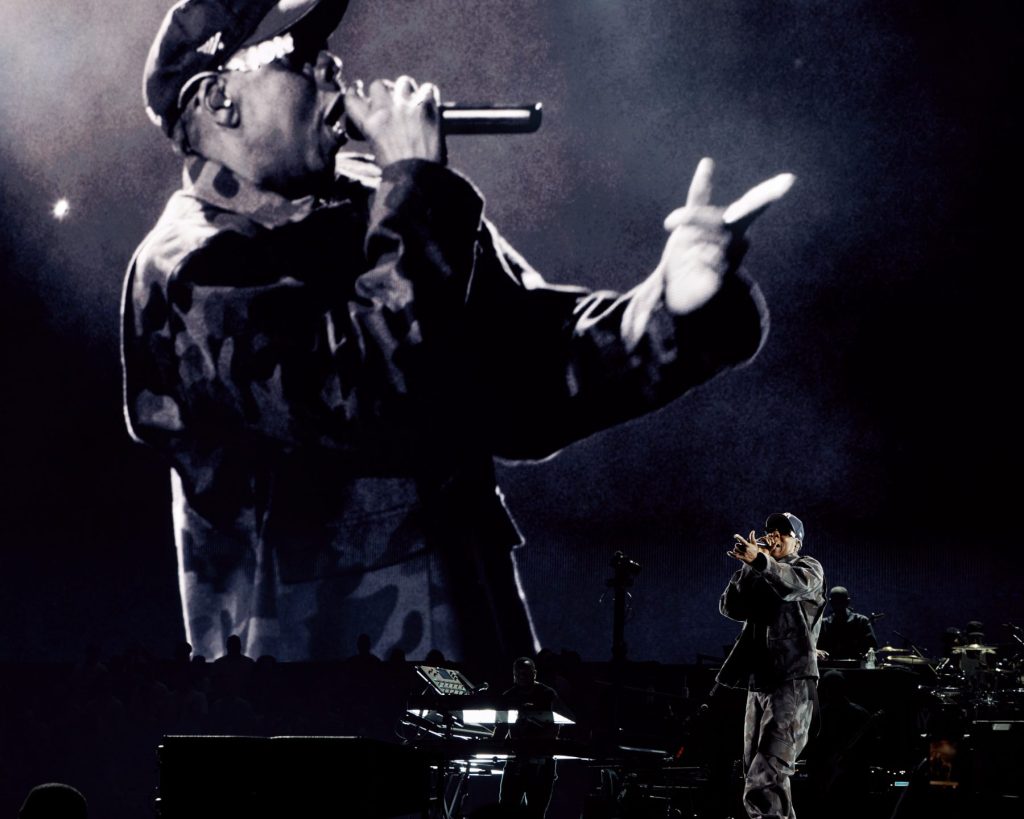
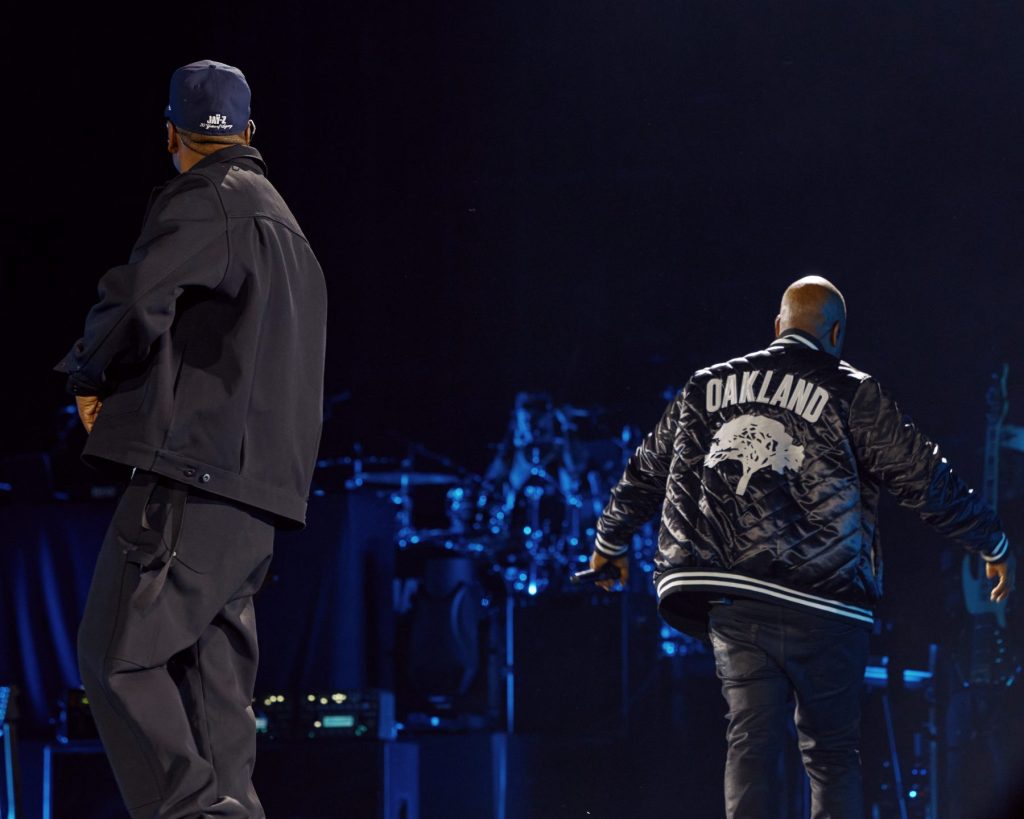
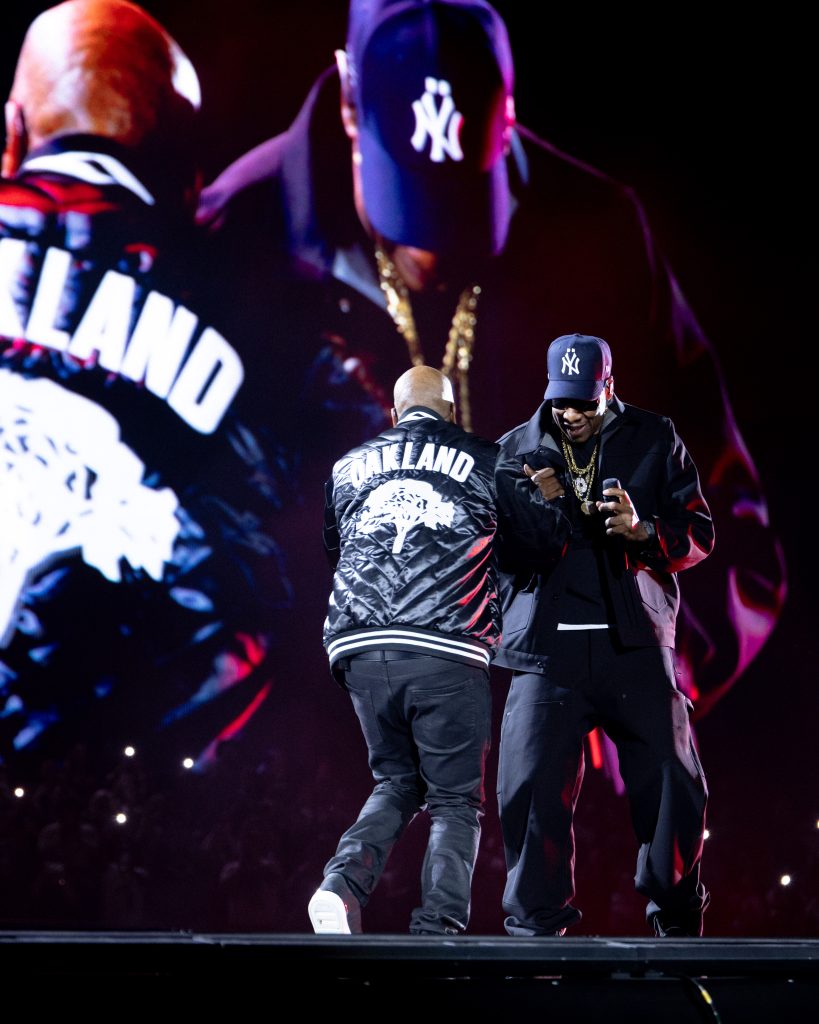
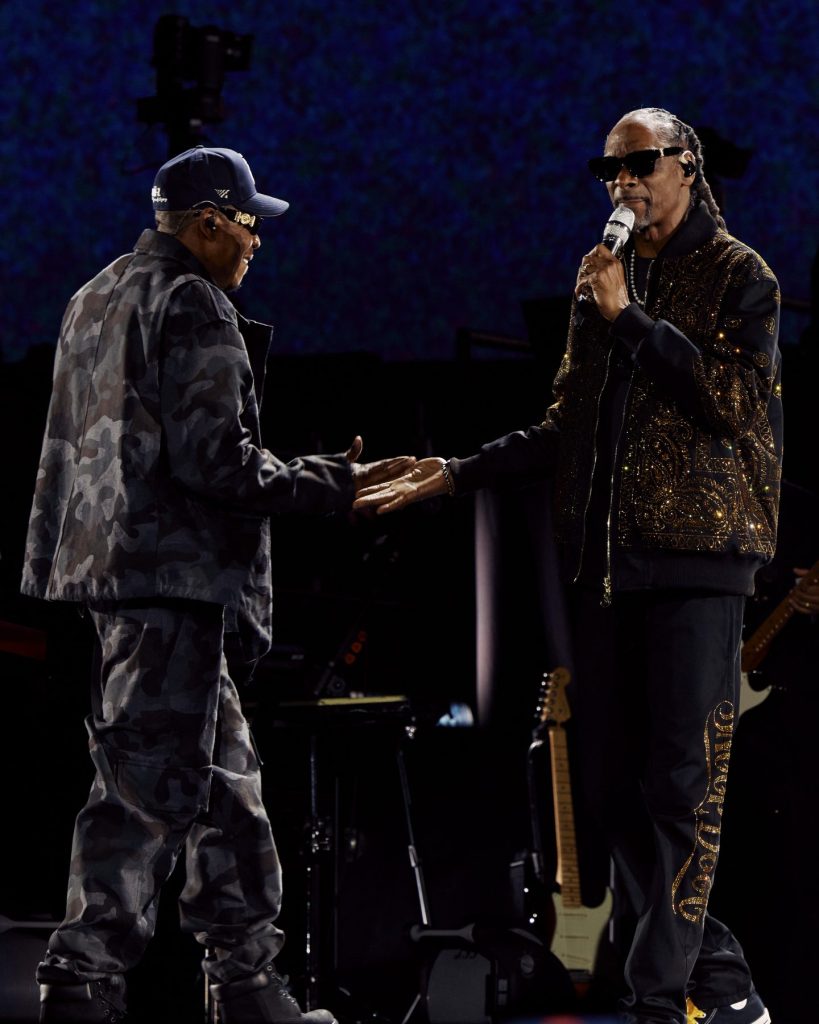
Jay-Z understood that the artist could become the entire enterprise.
Roc-A-Fella Records, built with Damon Dash and Kareem “Biggs” Burke, was a blueprint for a kind of cultural ownership that hip-hop entrepreneurs continue to study. Jay-Z was the unmistakable face and voice, but the label’s appeal also came from its wider world: the visual language, the roster, the fashion, the films and the sense that a recognizable way of life existed around the music. Dash’s forceful entrepreneurial style helped translate that ambition into projects such as Streets Is Watching and Paid in Full. Together, the early Roc-A-Fella era made it possible to imagine a rap brand as something larger than a release schedule.
Jay-Z’s business life ultimately extended into hospitality, fashion, entertainment management and sports. The 40/40 Club, established in 2003, placed athletes and entertainers inside the same social and commercial universe. Roc Nation followed in 2008, and Roc Nation Sports launched in 2013, applying lessons from artist management and brand development to professional athletes. His career supplied a recurring lesson: the music creates attention, but vision and infrastructure determine what attention can become.
That philosophy also had a parallel thread in the boxing culture surrounding Damon Dash. In 2005, Dash partnered with promoter Lou DiBella on Dash/DiBella Promotions, a venture connected to fighters including Andre Berto, Curtis Stevens and Jaidon Codrington. It was not a Jay-Z boxing promotion, nor was it the same enterprise as Roc Nation Sports. But it reflected the broader New York scene where hip-hop, fashion, nightlife and fighting could amplify one another. A boxer could have a story, an image and an audience before the opening bell, just as a musician could have an identity before the first note.
Why street sophistication still resonates.
My own relationship with Brooklyn began in the middle of the East Coast–West Coast rivalry, then grew into a lasting love of New York hip-hop. Jay-Z became my favorite rapper because he never seemed to regard street knowledge and elevated taste as contradictions. Damon Dash was the businessman I studied for the ambition behind that world. In my family, education and business acumen existed alongside a tougher, self-made street experience; my grandmother built her own corporation and pursued the life she believed she belonged in. Jay-Z’s music made those different influences feel part of one identity.
It is one reason boxing, fashion, music and editorial storytelling connect so naturally in my work through UND1SPTD. The connection is not about recreating Roc-A-Fella or claiming to know the people behind it. It is about recognizing what their era taught a generation of listeners: the right narrative, supported by a real business, can carry a person far beyond their original category. As I turn forty alongside Jay-Z’s thirtieth career anniversary, that lesson feels less like nostalgia and more like a responsibility to preserve the stories that shaped us.
Thirty years later, the blueprint is still alive.
The final moments at SoFi were not simply evidence that Jay-Z could still fill a stadium. They were evidence that the catalog had become part of a shared cultural memory. A daughter played the songs that introduced her father to the world. Houston’s storytellers, Oakland’s legends and Southern California’s architects occupied the same celebration. The memory of Nipsey Hussle was carried across both nights. And a Brooklyn voice held the entire narrative together.
Jay-Z’s greatest balancing act may be that he never made success sound like permission to forget where he came from. The ambition evolved, the audience expanded and the business became bigger than the records, but the voice that first introduced itself on Reasonable Doubt remained recognizable. That is the point of JAŸ-Z30: the journey from the block to the boardroom did not erase the artist. It gave his story new rooms in which to be heard.
Two nights. Thirty years. One remarkable reminder that culture becomes legacy when its stories are allowed to grow.
JAŸ-Z30 / Two Nights, One Legacy
Our two-night SoFi Stadium visual recap, narrated in Nicole Hernandez’s own voice. October 23–24, 2026.
Footage: Roc Nation. October 23 & 24 • Edit: Nicole Hernandez • Production: UND1SPTD • Roc Nation
Editorial Notes & Sources
This article is an independent UND1SPTD editorial and is not affiliated with or endorsed by JAŸ-Z30 or Roc Nation. Concert sequences and guest appearances are based on the official October 24 and 25 media releases; historical context is drawn from the sources below. Photo and video credits are all property of Roc Nation.
- JAŸ-Z30: Official October 23 concert release
- JAŸ-Z30: Official October 24 concert release
- Recording Academy: The history of Reasonable Doubt
- The 40/40 Club: Jay-Z business history
- Historical coverage of Dash/DiBella Promotions
Boxing x Music x Fashion x Culture. Beyond the moment.