
From “Finally” to “Stranded”: Black Women Built the Dance Floor. Destiny Leigh Is Carrying the Legacy Forward.
UND1SPTD MAGAZINE / MUSIC & CULTURE
Four decades after Black women transformed house and dance music into a global phenomenon, a new generation is finding its voice. San Diego’s Destiny Leigh is emerging as an artist to watch, bringing soulful vocals, fresh energy, and a growing catalog of dance records to a genre built by women who refused to be overlooked.
BY UND1SPTD EDITORIAL | NOVEMBER 9, 2026
Before the World Danced, Black Women Set the Rhythm
Before electronic dance music became a billion-dollar global industry, before superstar DJs commanded festival stages, and before house music dominated international playlists, Black women were providing the voices, emotions, and cultural foundations that made people fall in love with the dance floor.
The late 1970s, 1980s, and 1990s produced some of the most influential women in music history. Their records crossed racial boundaries, dominated nightclubs, and introduced audiences around the world to a sound that combined gospel, soul, disco, funk, and electronic production.
Donna Summer helped establish the blueprint. Loleatta Holloway’s commanding vocals became essential to the emerging house movement. Martha Wash delivered powerhouse performances that defined generations of dance records, while artists like Jocelyn Brown, Adeva, and Shannon helped bridge the evolution from disco into modern dance music.
But by the early 1990s, another generation of Black women was ready to take center stage.
CeCe Peniston introduced the world to “Finally” in 1991, creating an anthem that remains instantly recognizable more than three decades later. Crystal Waters followed her own distinctive path with “Gypsy Woman (She’s Homeless)” and later “100% Pure Love,” proving dance music could communicate meaningful stories without sacrificing its infectious rhythm.
Robin S. transformed “Show Me Love” into a timeless house classic in 1993, while Barbara Tucker, Ultra Naté, and countless others brought the unmistakable strength of Black female vocals into clubs around the world.
And behind the turntables, pioneering DJs and producers such as Stacey “Hotwaxx” Hale and K-Hand were pushing the genre forward, challenging an industry that too often celebrated male innovators while overlooking the women who helped create its sound.
“These artists weren’t simply performing dance music. They were defining it.”
The Voices Heard Around the World, but Not Always Recognized
The success of dance music came with a complicated history.
Black women supplied some of the genre’s most recognizable vocals, yet their contributions were not always properly credited. Martha Wash famously challenged the unauthorized use and misrepresentation of her performances on major dance hits, while Loleatta Holloway also fought for recognition after her vocals were sampled.
Their stories exposed an industry contradiction: the same voices powerful enough to sell millions of records were sometimes considered expendable when it came to marketing, visibility, and ownership.
Still, the music endured.
Their influence traveled from Chicago and New York nightclubs to European dance floors, eventually shaping mainstream pop, contemporary house, and electronic music.
Thirty to forty years later, the foundation those women established remains as influential as ever.
And a young singer from Southeast San Diego is finding her place within that tradition.
THE NEXT GENERATION
DESTINY
LEIGH.
A new voice. A timeless foundation.
Enter Destiny Leigh: A New Voice for a Familiar Feeling
Destiny Leigh’s journey into music began far from the glamour of international nightlife.
Raised in San Diego, Leigh developed her talents through local performing arts opportunities before earning a full scholarship to the prestigious Berklee College of Music. In 2022, she gained national television exposure as a contestant on NBC’s The Voice, joining Gwen Stefani’s team after performing Donny Hathaway’s “A Song for You.”
Her background was rooted in vocal performance, jazz, R&B, and soul. But in 2026, her catalog began revealing another compelling direction.
DANCE MUSIC.
With the release of “Stranded,” Leigh has stepped into a sonic space that connects the unmistakable emotion of classic Black dance vocalists with a contemporary generation of listeners.
The connection isn’t about recreating another artist’s sound. It’s about understanding what made those earlier records timeless: a voice that can carry a song’s emotional weight while the production keeps people moving.
Like the great house vocalists before her, Leigh has the kind of musical foundation that allows her to move between genres without abandoning the soul of her performance.
And “Stranded” is becoming an important introduction to that side of her artistry.
“Stranded” Is Only the Beginning
Leigh’s 2026 releases suggest that her move into dance music is more than a one-song experiment.
Alongside “Stranded,” she has released “No More Talking,” “You’re in Love,” “Driveway,” and “Spinning,” building a growing collection of records that positions her within today’s house and dance landscape.
The music is beginning to reach listeners beyond her hometown.
In October, Milwaukee’s Radio Milwaukee highlighted “Stranded” during its In the Mix programming, placing Leigh alongside established contemporary electronic artists. The station described her sound as a combination of soulful vocals and dance-floor energy.
That recognition matters for an emerging independent artist.
Dance music has always traveled through DJs, radio programmers, clubs, and listeners willing to champion a record before the rest of the world catches on.
The same culture that helped turn “Finally” and “Show Me Love” into classics still provides opportunities for fresh voices to be discovered.
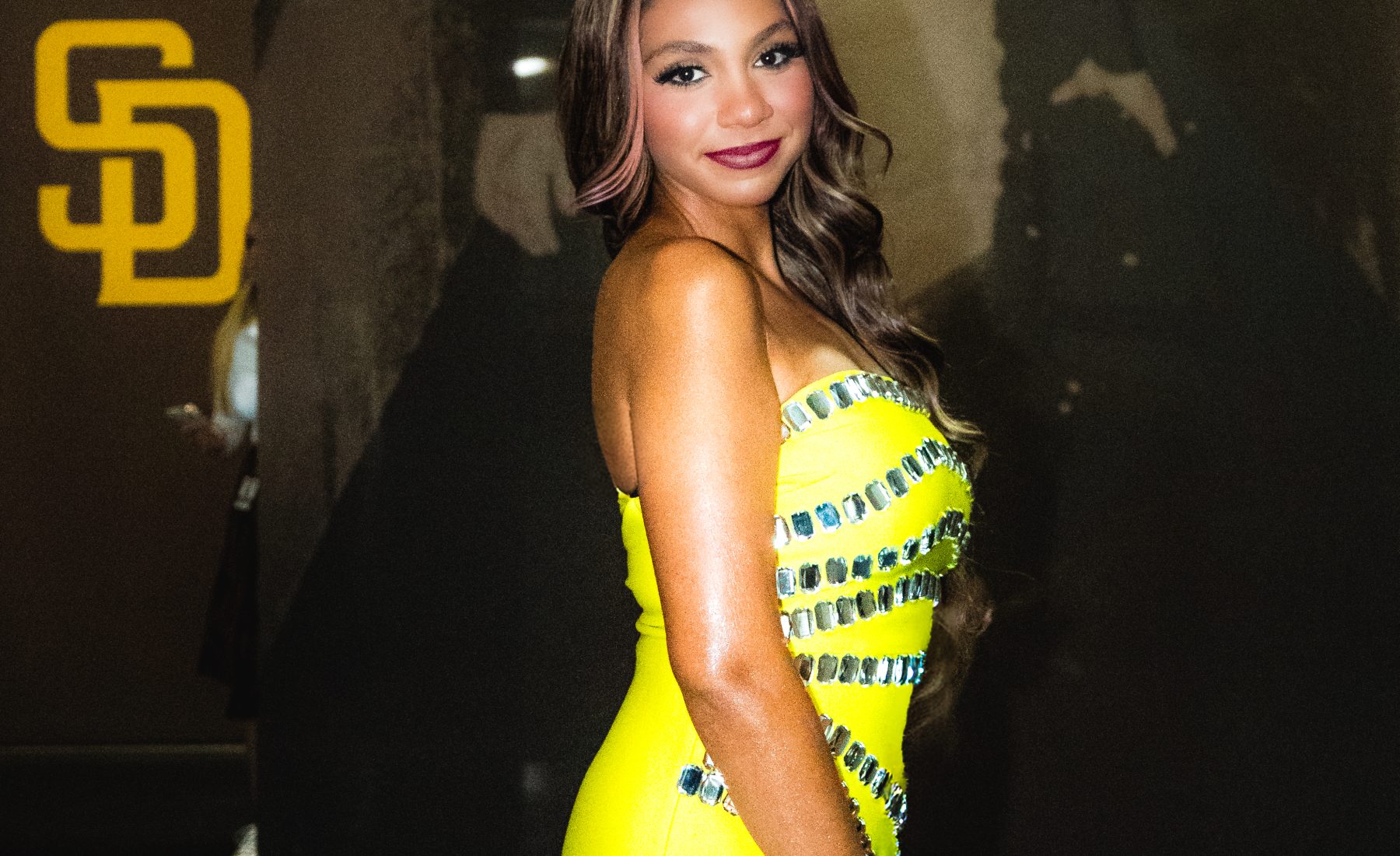
Meanwhile, Leigh’s reach extends beyond recorded music. In October 2026, she returned to San Diego to perform the national anthem at Petco Park during the Padres’ postseason, another moment in a career steadily expanding from local stages to larger audiences.
Thirty Years Later, the Dance Floor Still Belongs to Black Women
There is something significant about watching a new generation of Black female artists enter a genre their predecessors helped establish.
The dance music renaissance isn’t simply about nostalgia, vintage synthesizers, or bringing back the sounds of the 1990s.
It’s about recognizing the cultural lineage behind the music.
The voices of Martha Wash, CeCe Peniston, Crystal Waters, Robin S., and their contemporaries weren’t accessories to a beat. They were the artists who gave those records identity, personality, vulnerability, and staying power.
Today, artists like Destiny Leigh have opportunities to build on that history while shaping their own careers and creative identities.
For Leigh, the opportunity is particularly compelling. She’s a young, independent artist from Southeast San Diego whose career has already carried her from local performing arts programs to Berklee, national television, and now an expanding dance music catalog.
There is still a difference between releasing promising records and establishing the kind of enduring legacy those pioneering women created. That recognition takes time, consistency, and a connection with audiences that lasts beyond any single release.
But the foundation is there.
And with “Stranded” leading a growing collection of new music, Destiny Leigh is giving listeners a reason to pay attention.
Because the next great era of dance music doesn’t have to forget where it came from.
It can honor the women who built it while making room for the women coming next.
From “Finally” to “Show Me Love,” from “100% Pure Love” to “Stranded,” the generations may change, but the heartbeat remains.
BLACK WOMEN HAVE ALWAYS BEEN THE SOUL OF THE DANCE FLOOR.
Destiny Leigh is ready to add her voice to the story.