
They Love Kobe Bryant But Who Profits Off of Black Culture?
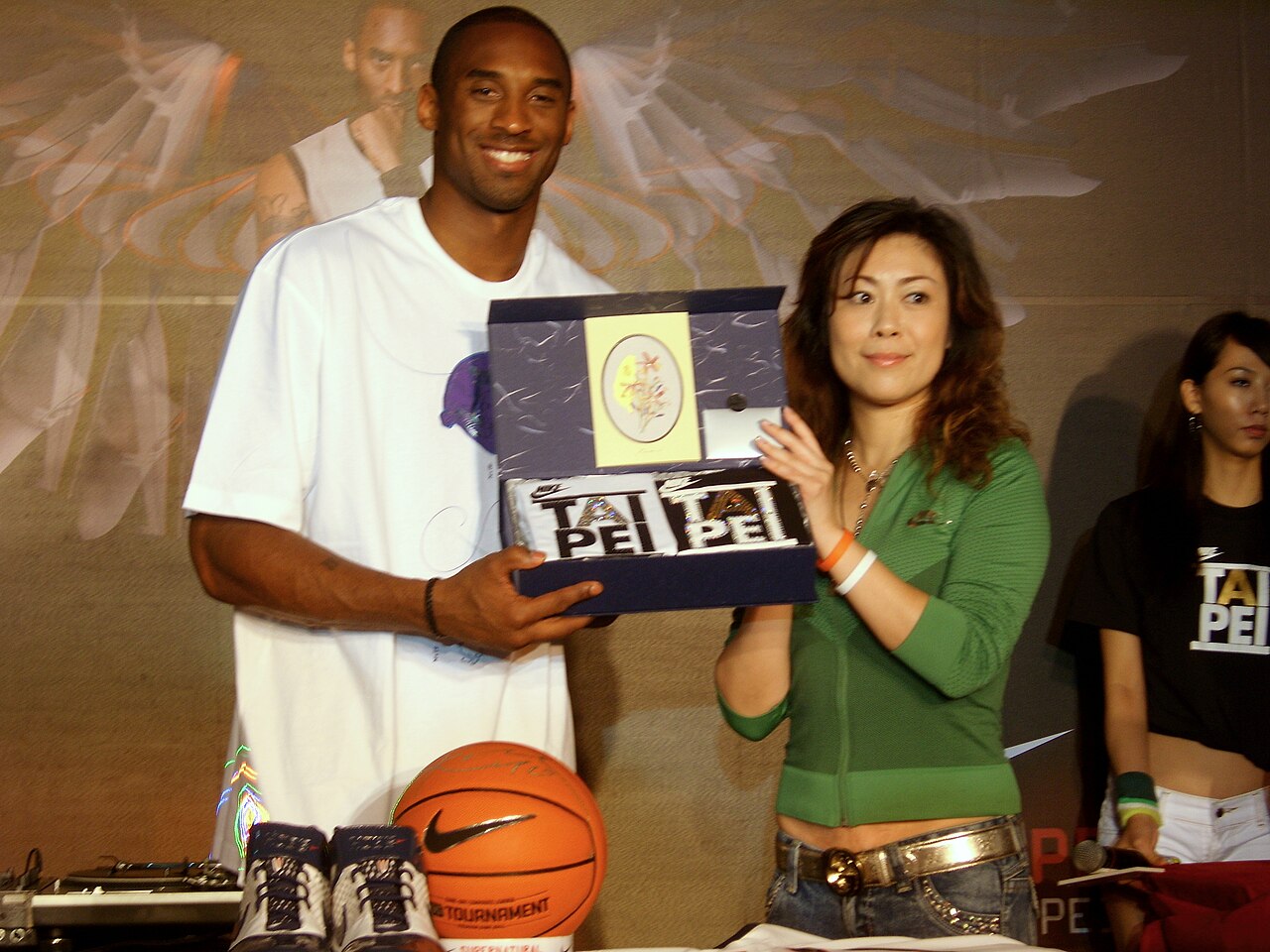
The Filipino American Relationship With Hip-Hop, Basketball, the Model Minority Myth, and the Business of Black Excellence
Everybody loves Kobe Bryant.
Especially in the Philippines.
His jerseys, sneakers, signature moves, and competitive mentality became fixtures of Filipino basketball fandom.
And basketball isn’t the only cultural connection.
Hip-hop. DJing. Breakdancing. Streetwear.
Black American cultural expressions have become deeply embedded in parts of Filipino American youth culture.
But there’s a conversation I rarely hear people have.
What happens when people embrace Black culture, build businesses around it, and profit from its popularity, yet fail to extend that same respect to Black people?
And more importantly, who actually receives the money?
I’m Japanese and Mexican. I grew up surrounded by Black and Latino communities. I studied music, worked around artists, and spent years inside entertainment and professional boxing.
I’m not approaching this as someone who recently discovered hip-hop through social media.
I lived through an era when the DJ was the heartbeat of the culture.
And I’ve watched Black creativity become a commercial opportunity for people who sometimes have little connection to the communities responsible for its creation.
Hip-Hop Was Already Here
Before DJing became a lucrative entertainment brand, before international festivals and corporate sponsorships, hip-hop was born in the Bronx.
Black, Afro-Caribbean, and Latino communities created an expression of music, dance, art, resistance, and survival.
DJ Kool Herc, Grandmaster Flash, Afrika Bambaataa, and generations of early DJs helped establish the foundation.
It came from neighborhoods that were being neglected, communities that were being marginalized, and young people who built something extraordinary with whatever resources they had.
That history matters.
Because participating in an established culture is not the same as creating it.
And commercial success within that culture does not automatically establish that someone contributed proportionately to its origins or growth.
I want us to stop confusing proximity to Black culture with ownership of Black culture.
The DJs Who Made the Culture Move
I grew up studying DJs.
Funkmaster Flex. Big Kap. And so many others who were instrumental in bringing hip-hop to clubs, radio, mixtapes, and major venues.
These weren’t people simply standing behind laptops pressing play.
They understood the records.
They understood the breaks.
They understood the crowds, the timing, the transitions, and how to create moments that made entire rooms explode.
They helped build the audiences and platforms that later became enormously valuable.
And one question continues to bother me.
Why hasn’t the compensation of the people who built those audiences consistently reflected the commercial value of what they created?
I remember an industry where even major Black DJs could be discussed in terms of hourly performance fees rather than long-term ownership and participation in the businesses their popularity supported.
I remember rates around $500 an hour being part of that conversation.
Those figures deserve further investigation through historical contracts, booking records, and interviews.
Because the comparison I want to make isn’t simply about what somebody earned for a two-hour performance.
It’s about the difference between receiving a fee and owning the business that profits from your influence.
The difference between being hired to entertain and controlling the commercial platform.
Between generating demand and collecting the largest share of the revenue.
When Participation Becomes a Business Model
Filipino American participation in hip-hop has been studied for decades.
But my concern isn’t whether a Filipino DJ can learn to scratch or whether a Filipino dancer can master breaking.
My concern is what happens economically after that skill becomes commercially valuable.
Who owns the events?
Who negotiates the sponsorships?
Who controls the bookings?
Who receives licensing revenue?
And who receives the largest financial reward when a cultural movement becomes attractive to mainstream audiences?
The same questions apply to the electronic dance music industry.
When DJing moves from Black cultural spaces into corporate festivals, international branding campaigns, and lucrative entertainment partnerships, it’s worth examining how perceptions of race, marketability, and respectability affect who receives opportunities.
That isn’t a claim that every white or Asian DJ receives preferential treatment.
It is a challenge to investigate whether industry gatekeepers have historically valued the same skills differently depending on who performs them.
If the culture was profitable enough to build an international industry, why weren’t its original creators always positioned to own that industry?
The Model Minority and the Politics of Access
The model minority stereotype has historically portrayed Asian Americans as hardworking, disciplined, respectable, and successful.
It sounds complimentary until you examine how the stereotype has been used.
The narrative has often been contrasted against racist assumptions about Black Americans.
Instead of recognizing that different communities faced different historical conditions and forms of discrimination, the comparison implied that some minorities succeeded because they behaved better than others.
And I wonder how those assumptions influence the entertainment business.
If one person is stereotyped as professional and trustworthy while another is stereotyped as difficult, aggressive, or threatening, what happens when both seek access to the same opportunity?
Whose business proposal receives serious consideration?
Who is trusted with the budget?
Who becomes the executive?
Who remains the entertainer?
These are questions that require evidence, not assumptions about every Asian or Filipino professional.
But the structural problem of unequal access is real.
A 2021 USC Annenberg study found that only 7.5% of executives at the vice-president level and above across the music companies surveyed were Black.
Black creativity was central to the industry’s business, but Black representation in its leadership remained disproportionately limited.
That’s a financial and institutional issue worth investigating.
Kobe Bryant and Selective Acceptance
Kobe Bryant’s popularity in the Philippines was extraordinary.
But that doesn’t answer the question I find most important.
Can someone celebrate a Black superstar while continuing to hold prejudices about Black people?
Absolutely. Those attitudes can coexist.
That doesn’t mean we can assume Filipino fans admired Kobe because they considered him one of the “good ones.”
But the expression itself raises an uncomfortable question.
Why are some Black people treated as exceptions while negative stereotypes about Black people generally are allowed to survive?
A successful athlete shouldn’t have to become famous, wealthy, or globally admired to receive the respect that every human being deserves.
And being a fan of a Black celebrity does not automatically mean someone has examined their own racial prejudices.
I want to know whether that contradiction exists in individual families, social circles, and professional organizations—and what the people affected by it have experienced.
What Happens When Access Becomes Intimacy?
This conversation goes beyond DJs, basketball, and celebrity fandom.
It also enters personal relationships.
I’ve spent years around athletes, entertainers, managers, and the people who gain proximity to them.
Sometimes, romantic relationships and professional opportunities become intertwined.
A partner can become an adviser.
An adviser can become a gatekeeper.
A gatekeeper can influence friendships, business decisions, family access, and even public reputation.
Some partners use that influence responsibly, working together to build something lasting.
Others may use it to establish control.
What interests me is how racial and cultural expectations can intensify those dynamics.
What happens when someone benefits from a Black man’s celebrity but looks down on the communities he comes from?
What happens when a partner wants the wealth and status associated with Black athletic or musical excellence but wants to distance him from his cultural identity?
What happens when children are encouraged to embrace one side of their heritage while the other is treated as less desirable?
I want to hear from people who have lived through those situations.
I also want to examine documented incidents where personal relationships became vehicles for financial exploitation or professional isolation.
This is not a claim about the inherent character of Filipino women or women from any other ethnic background.
Exploitation is a behavior. The question is whether racial stereotypes sometimes make that behavior easier to conceal, excuse, or reward.
Cultural Exchange or Economic Extraction?
There’s a difference between appreciating a culture and treating it as a resource to extract.
Cultural exchange can involve collaboration, mutual respect, shared opportunity, and fair compensation.
Economic extraction occurs when people or institutions benefit disproportionately from cultural work while the people responsible for creating its value receive inadequate compensation or control.
The distinction isn’t determined by ethnicity.
It’s determined by what happens to the money, the intellectual property, the opportunities, and the people involved.
An individual artist may genuinely admire hip-hop and still participate in an industry whose financial arrangements disadvantage Black creators.
A company may publicly celebrate Black History Month while failing to offer Black professionals meaningful ownership or decision-making power.
A romantic partner may publicly praise a Black athlete while privately attempting to control his relationships or career.
Each situation requires its own evidence.
But the underlying question remains:
Who gets to profit from Black excellence, and what responsibility comes with that profit?
I’m No Longer Interested in Surface-Level Appreciation
I don’t want another conversation about how much somebody loves Kobe Bryant.
I want a conversation about ownership.
About historical compensation.
About sponsorship negotiations.
About cultural credit.
About corporate gatekeeping.
About how Black athletes and musicians become profitable while other people and institutions control the businesses around them.
And yes, about how race and personal relationships can influence those business arrangements.
I want to examine the experiences of Filipino and Black families, including people who have witnessed anti-Black attitudes alongside public admiration for Black athletes and entertainers.
I want to speak with veteran DJs about what they actually earned.
I want to compare those figures with the revenue earned by promoters, venue operators, festival owners, management companies, and brands.
I want to investigate whether perceptions of racial respectability have influenced those opportunities.
Because Black culture has generated extraordinary economic value.
And the people responsible for that culture deserve more than applause while someone else controls its commercial future.
Loving the culture isn’t the same as respecting its people.
Participating in the culture isn’t the same as creating it.
And profiting from the culture isn’t proof that the business has treated its originators fairly.
The conversation needs to move beyond who loves basketball, hip-hop, or Kobe Bryant.
It needs to follow the money.
Research & Further Reading
- Smithsonian — Hip-Hop in the Bronx
- USC Annenberg — Diversity in Music Industry Leadership
- Black Music Action Coalition — Music Industry Reports
- Antonio T. Tiongson Jr. — Filipinos Represent: DJs, Racial Authenticity, and the Hip-hop Nation
- Funkmaster Flex — Biography, AllMusic